Third-party reproduction, encompassing surrogacy and gamete (egg or sperm) donation, is a transformative branch of assisted reproductive technology (ART). It enables individuals and couples to build families when they cannot conceive or carry a pregnancy using their own genetic materials or uterus. At its core, this process involves the generous participation of a donor or a gestational carrier, combined with advanced medical procedures like In Vitro Fertilization (IVF), to help intended parents achieve their dream of having a child.
Surrogacy and Donation at a Glance
- Surrogacy: A woman (the surrogate Mother or gestational carrier) agrees to carry and deliver a baby for another person or couple (the intended parents).
- Egg Donation: A woman (the donor) provides her eggs to be used in IVF to create embryos for intended parents or a surrogate to carry.
- Sperm Donation: A man (the donor) provides his sperm to fertilize an egg, either from the intended mother or an egg donor.
Together, these options create possibilities for single parents, LGBTQ+ individuals and couples, those facing infertility, genetic risks, or the inability to carry a pregnancy.
Read More: How Does Surrogacy Work?
Surrogacy (Gestational Carrier)
In gestational surrogacy, the most common modern practice, the surrogate carries an embryo created using the intended parents’ or donors’ egg and sperm. Crucially, the surrogate has no genetic link to the baby. This process involves IVF and a carefully coordinated medical and legal framework to ensure the well-being of all parties.
Sperm Donation
Sperm donation involves using sperm from a screened donor. The sperm is used to fertilize an egg via IVF or, less commonly, through intrauterine insemination (IUI). Donors undergo rigorous health, genetic, and background screenings before their sperm is frozen and stored for use.
Egg Donation
Egg donation is a key solution for women who cannot use their own eggs. A donor undergoes ovarian stimulation, and her eggs are retrieved. These eggs are then fertilized with sperm in the lab to create embryos. One or more of these embryos are transferred to the uterus of the intended mother or a gestational surrogate to establish a pregnancy.
Center for Surrogacy and Egg Donation at VitaLife
At VitaLife, we operate as a dedicated center for surrogacy and egg donation based in Iran, serving intended parents from around the globe. We understand the profound journey of overcoming infertility and are committed to providing high-quality, accessible, and compassionate care. Our team consists of experienced fertility specialists, embryologists, and coordinators who guide you through every step with expertise and empathy. We are proud to help individuals and families worldwide realize their parenthood goals through our comprehensive and affordable programs.
A Glimpse into Our Services at VitaLife:
- Gestational Surrogacy in Iran: We manage the entire surrogacy journey, from matching with a carefully selected surrogate to legal coordination and medical care.
- Egg Donation Program: We maintain a diverse database of fully screened egg donors to help you find a match that meets your preferences.
- Integrated Packages: For those needing both services, we offer combined egg donation and surrogacy programs for a streamlined experience.
Egg Donation Cost + Surrogacy Cost
We believe in clear, upfront pricing to help you plan your journey with confidence.
- Egg Donation Cost: The cost for egg donation in Iran typically ranges from $2,000 to $3,500.
- Surrogacy Cost: The standard surrogacy program fee starts at approximately $19,000.
- Combined Program: For a complete package using both a donor egg and a surrogate, the total cost is highly competitive, generally ranging from $21,000 to $22,500. This represents exceptional value compared to many other destinations, without compromising on medical standards or care.
How Are Surrogates and Egg Donors Selected at VitaLife?
Our selection process is thorough and designed to ensure the health and well-being of all parties, especially the future child. All candidates undergo extensive medical, psychological, and background screenings.
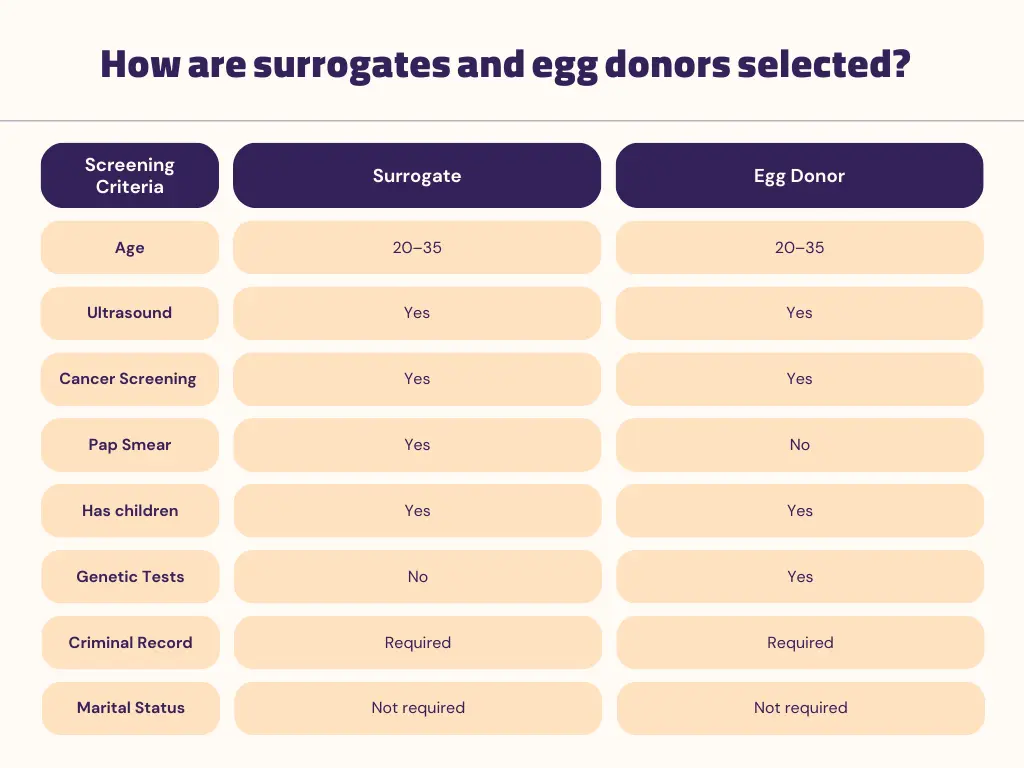
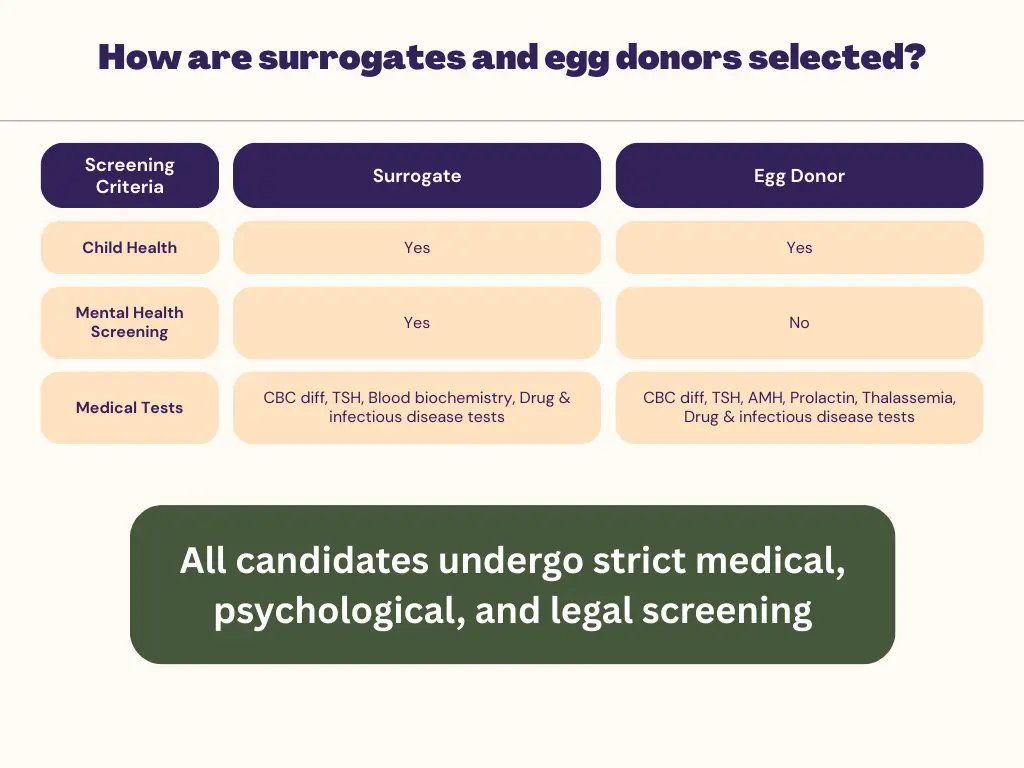
Surrogate vs Egg Donor: Selection Criteria
VitaLife's rigorous screening process for both surrogates and egg donors
Proven healthy pregnancy
Choosing Your Egg Donor:
We empower you in your choice. For egg donors, we provide a detailed profile that includes:
- Photos (often from childhood/adulthood)
- Physical characteristics (height, weight, eye & hair color)
- Blood type
- Educational background and interests
- A summary of her medical and genetic screening results
What Are the Risks of Surrogacy and Donation?
While the medical procedures (like IVF) carry standard risks such as reaction to medications or multiple pregnancies, third-party reproduction adds emotional, ethical, and legal dimensions.
- Psychological Considerations: All parties may experience complex emotions. We recommend and provide access to professional counseling to navigate relationships, expectations, and the emotional journey.
- Legal Framework: A clear, legally-binding contract is essential. It outlines everyone’s rights, responsibilities, and financial arrangements. We ensure all agreements are managed under appropriate legal guidance.
- Medical Risks for Surrogates: As with any pregnancy, surrogates are monitored for potential obstetric risks.
The key to mitigating these risks is working with a reputable, transparent agency like VitaLife. We provide the medical expertise, legal support, and psychological resources to create a safe, respectful, and supported path to parenthood for everyone involved.
Conclusion
Choosing surrogacy and egg donation is a significant step toward building a family. Success depends on understanding the process and partnering with a trustworthy and experienced center. With the right support and information, surrogacy and egg donation can be a clear and achievable path to fulfilling the dream of parenthood.
FAQ
Will my baby have my DNA if I use a donor egg?
No. The baby will have the egg donor’s DNA and the sperm donor’s or your partner’s DNA. You will be the gestational and legal mother if you carry the pregnancy.
What are the disadvantages of egg donation?
The main disadvantages are: no genetic link to the child, potential emotional complexity, higher cost, and the medical risks associated with IVF procedures.
Will my child look like me if I use a donor egg?
Not genetically, but you can select a donor whose physical characteristics (like hair color, eye color, height) match yours to increase resemblance.
Who is the real mother of a donor egg baby?
The “real mother” is the intended mother who raises the child. The egg donor is the genetic mother, but the gestational/legal mother is the one who carries and parents the child.
Can I see a picture of my egg donor?
Yes, at VitaLife, we provide donor profiles that include photos, along with details about height, weight, eye color, blood type, and education.
Which country is best for IVF with donor eggs?
Iran (through centers like VitaLife) is an excellent option due to affordable costs ($2,000-$3,500 for donation), high-quality medical care, experienced specialists, and inclusive policies for all intended parents.