Surrogacy in Iran
International Affordable Surrogacy Agency
3+
Years Experience
95%
Surrogacy Success Rate
Legal
Full Legal & Documentation Support
Join thousands of international couples who have successfully achieved parenthood through our affordable surrogacy programs in Iran. With over 3 years of experience, a 95% success rate, and complete legal support.
Quick Facts About Surrogacy in Iran
Average Cost
$18K – $28K
Best Price Globally
Success Rate
95%
Among the highest globally
Legal Status
Fully Legal
Government approved
Process Duration
12–15 Months
From consult to birth
International Clients
Worldwide
worldwide clients
Join thousands of happy parents who trusted our experience
Your journey to parenthood starts here
Why Choose Iran for Surrogacy?
Iran offers a unique balance of affordability, legal protection, and medical excellence—making it one of the world’s most trusted surrogacy destinations.
About Vita Life - Premier Surrogacy Center in Iran
Why Choose VitaLife for surrogacy in iran?
international low cost surrogacy
Provider of international cheap surrogacy services
Licensed & Accredited
Fully licensed by Iranian Ministry of Health with international accreditations
Expert Medical Team
Board-certified reproductive endocrinologists and fertility specialists
Comprehensive Legal Support
Full legal documentation and international law compliance
24/7 International Support
Dedicated coordinators fluent in multiple languages
At VitaLife, we firmly believe that life is a precious gift, and we are dedicated to helping couples who dream of having children. Through our professional and specialized affordable surrogacy services, we act as a bridge between intended parents and compassionate surrogate mothers.
Our mission is to create life. We support couples from around the world in fulfilling their dream of parenthood by leveraging the expertise of our highly experienced team. By providing a safe, supportive, and professional environment, we ensure that every step of the surrogacy journey in Iran—recognized as one of the cheapest places for surrogacy—is carried out with the utmost care and sensitivity.
Since 2023, we have been at the forefront of reproductive medicine in Iran, helping over 2,000 international couples achieve their dreams of parenthood. With our focus on international low cost surrogacy, we combine cutting-edge medical technology, experienced healthcare professionals, and personalized care to ensure the highest success rates in the region while offering affordable surrogacy options without compromising quality.

State-of-the-Art Fertility Facilities in Iran
Modern IVF laboratories designed to meet global medical standards, delivering precision-driven fertility care.

Experienced Team
Over 50 medical professionals with combined 200+ years of experience in reproductive medicine

Global Network
Partnerships with international clinics and legal firms for seamless cross-border care

Why Iran is the Best Destination for International Surrogacy?
Iran has emerged as a leading destination for surrogacy, offering unique advantages that make it the preferred choice for international couples
Is surrogacy legal in Iran?
Yes. Surrogacy is legal in Iran for both Iranian citizens and foreign intended parents. Since 2003, Iran surrogacy law has legally recognized and regulated surrogacy through licensed fertility clinics and legal agreements.
- Clear legal documentation and parental rights transfer
- Government oversight and regulation of surrogacy centers
- Protection for both intended parents and surrogate mothers
- International recognition of surrogacy agreements
Medical Excellence in Iran
Iran’s medical system is renowned for its excellence in reproductive medicine:
- Advanced IVF technology and laboratory equipment
- Highly trained fertility specialists with international education
- Success rates comparable to leading Western countries
- Comprehensive genetic testing capabilities (PGS/PGD)
Iran surrogacy costs are typically 60–70% lower than in the USA, Canada, and many European countries, while still providing high-quality IVF treatment, experienced fertility specialists, and modern medical facilities.
Iran surrogacy law legally recognizes gestational surrogacy and provides legal agreements, parental documentation procedures, and government-regulated fertility clinics for intended parents.
Many fertility centers in Iran work with experienced IVF specialists, advanced reproductive technologies, and internationally trained medical teams with high IVF success rates.
International intended parents from different countries, cultures, and religious backgrounds commonly pursue surrogacy in Iran with personalized support and privacy throughout the process.
Surrogacy Success Rate in Iran
The surrogacy success rate in Iran exceeds 95% after pregnancy is confirmed. All surrogate mothers receive complete medical and physical evaluations before the embryo transfer procedure. These health checks ensure the surrogate's body is fully ready for a safe and successful pregnancy.
Several key factors affect the final outcome:
At VitaLife, we carefully evaluate every single factor before starting treatment. This detailed approach is what allows us to maintain our 95% success rate for international intended parents.
Comparing Surrogacy in Iran vs Other Destinations
| Factor | Iran | USA | Ukraine | Georgia |
|---|---|---|---|---|
| Average Cost | $15,000 - $25,000 | $100,000+ | $30,000 - $50,000 | $25,000 - $40,000 |
| Legal Status | Fully Legal | Varies | Legal | Legal |
| Success Rate | 95% | 85-90% | 80-85% | 75-80% |
| Wait Time | 2-3 months | 6-12 m | 4-6 m | 3-5 m |

surrogacy cost in iran
Surrogacy cost in Iran starts at $18,000 for basic packages and goes up to $30,000 for guaranteed surrogacy package. Adding genetic tests like PGS or PGD raises the price to around $19,500–$31,500. Success packages with extra transfers cost about $26,000–$28,000. So, surrogacy cost in Iran gives you many choices, from simple and affordable to full-support plans with higher success rates.
Normal Surrogacy
Surrogacy in Iran
- One full IVF cycle + one embryo transfer
- Professional surrogate selection
- Legal & birth certificate help
- Paid in 3 installments
Normal + PGS
With genetic screening
- All Normal package benefits
- PGS Screening
- Higher success rates (98%)
- Reduced miscarriage risk
Normal + Gender Selection
With genetic screening
- All Normal package benefits
- PGD Selection
- Maximum genetic safety
- Family history screening
Guaranteed Surrogacy
Complete guarantee
- Unlimited IVF cycles until success
- Complete medical care
- Legal & coordination support
- Paid in 3 installments
Guaranteed + PGS
With genetic screening
- All guaranteed benefits
- PGS Genetic Screening
- 98% success rate
- Minimum risk
Guaranteed + PGD
With genetic screening
- All guaranteed benefits
- PGD Diagnosis
- Single gene testing
- Genetic disorder prevention
Success Package
1 cycle + 10 transfers
- 1 IVF cycle + 10 embryo transfers
- Complete medical supervision
- Legal documentation help
- Paid in 3 installments
Success + PGS
With genetic screening
- All success package benefits
- PGS Chromosome screening
- Reduced miscarriage risk
- Higher transfer success
Success + PGD
With genetic screening
- All success package benefits
- Comprehensive PGD analysis
- Genetic safety guarantee
- History screening

A beautiful Miracle is here
Today, we celebrate the arrival of a beautiful baby and the beginning of a brand-new chapter for an amazing family. 👶🤍
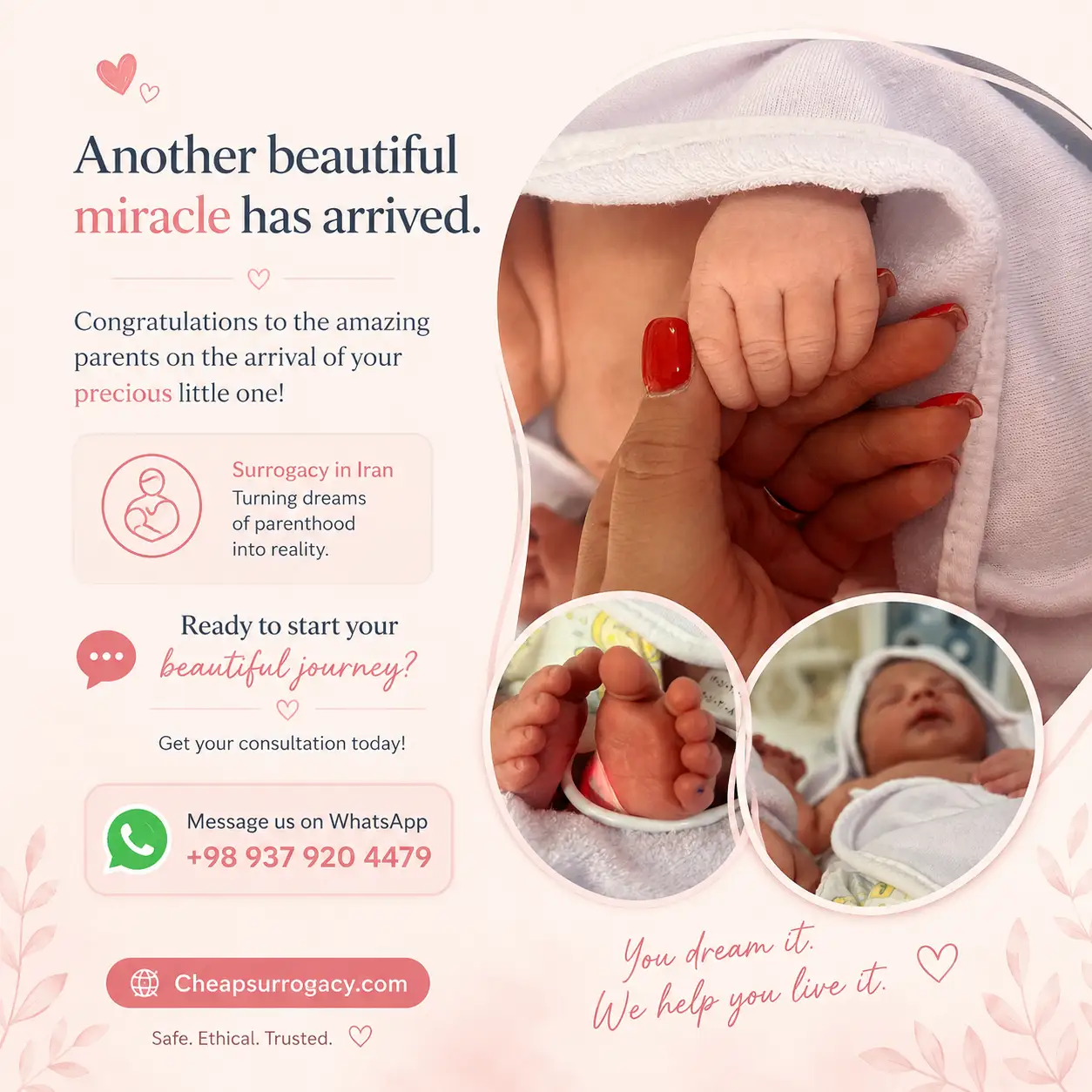
Baby born through surrogacy in Iran
💫 Surrogacy is more than a medical journey — it’s a story of hope, patience, love, and dreams finally coming true. 🤍

A miracle. A new beginning.
This beautiful baby is one of the many miracles born through surrogacy in Iran — a journey that changed a family’s life forever. 💖

Another dream has come true!
A beautiful baby has been born through our Surrogacy in Iran program, bringing happiness to an international family. ❤️👶

Surrogacy in Iran Success Story
Healthy newborn baby born through a successful Surrogacy in Iran journey for an international intended couple with VitaLife. ❤️👶

Welcome to the World, Little One! 💜
Another beautiful family has been completed through Surrogacy in Iran. ❤️👶

Another beautiful miracle has arrived!
This precious newborn is another successful Surrogacy in Iran journey, bringing the dream of parenthood to a loving international family. ❤️

beautiful baby has been born 💜
👶 Another beautiful baby has been born through Surrogacy in Iran. The next success story could be yours. ❤️

A beautiful new beginning 💚
celebrating the arrival of a precious baby born through surrogacy in Iran with the support of VitaLife Fertility Cente ❤️👶

Chinese newborn baby 💚
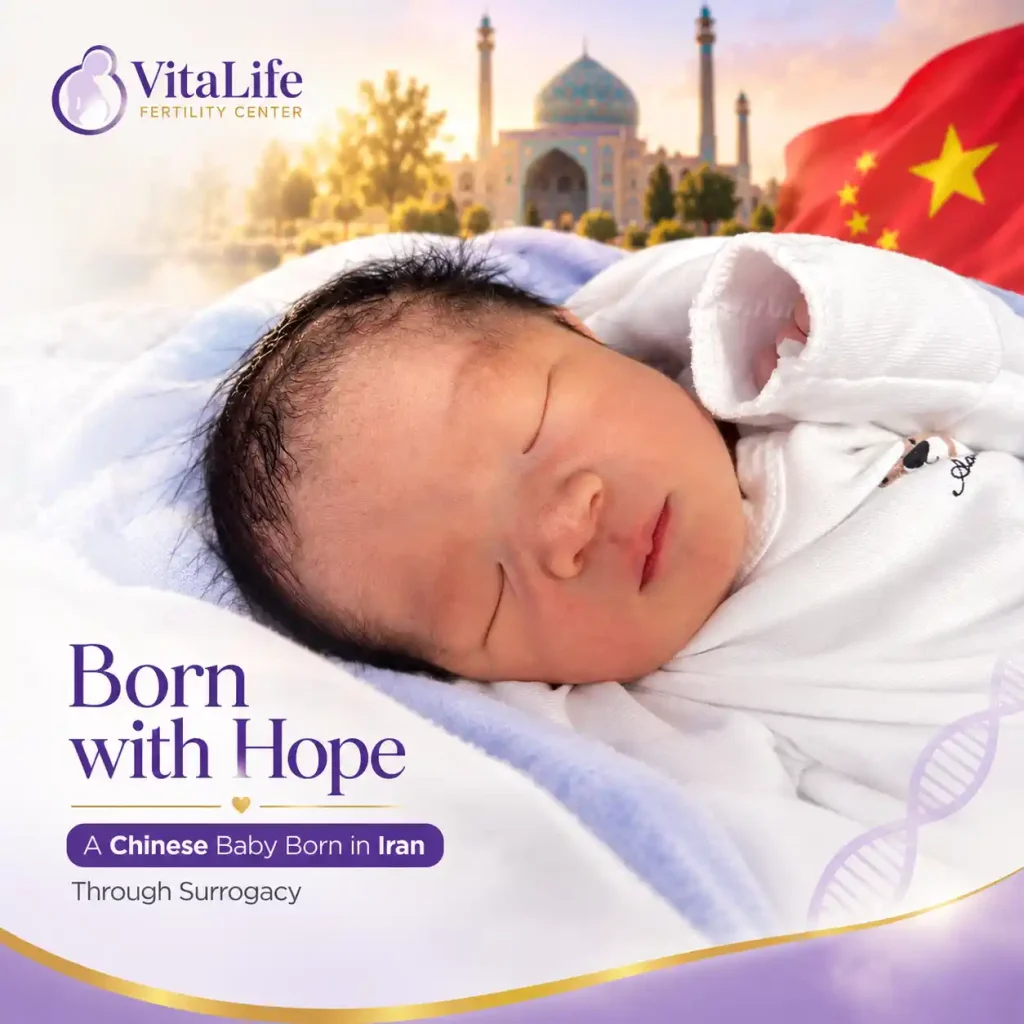
Chinese newborn baby 💚
Chinese newborn baby born through surrogacy in Iran, featured by VitaLife Fertility Center
Who Can Become a Surrogate in Iran
Not every woman can become a surrogate in Iran — and honestly, that’s a good thing.
Surrogates go through medical screening, health evaluations, and must already have a history of a healthy pregnancy before being approved.
Can we even do surrogacy in Iran?
Most couples don’t get clear answers about surrogacy in Iran until they’re already deep into the process.
So in this video, we talked about the legal reality, who can qualify, and the details many agencies never explain clearly.
international affordable surrogacy agency
Why are some surrogacy programs $150,000 while others cost under $30,000?
In this video, we compare international surrogacy agency options, legal systems, and affordable programs for intended parents in 2026.
Your Surrogacy Journey in Iran: Step by Step
Your first visit is shorter than most people expect, and its length depends on your treatment. A standard IVF cycle needs about 14 days in Iran. IVF with embryo transfer takes around 21 days, and the same applies if you use an egg donor with embryo transfer (up to 21 days). If you combine IVF with surrogacy, the first visit is typically 14 days. If you combine an egg donor with surrogacy, your stay can be as short as 3 days: on the first day you provide your first sperm sample, and then we sign the contract and have it notarized at a notary office. On the second day you provide the second sample, and the third day is left as a buffer.
Surrogacy Timeline in Iran
Initial Consultation (Week 1)
Free consultation and medical evaluation
Documentation & Legal (Weeks 2-4)
Contract preparation and legal documentation
Surrogate Matching (Weeks 5-8)
Careful selection and matching process
Medical Procedures (Weeks 9-12)
IVF cycle and embryo transfer
Pregnancy & Birth (9 months)
Monitoring, care, and delivery
Key Milestones in Your Surrogacy Journey
Contract Signing
Week 4
Surrogate Selection
Week 8
Embryo Transfer
Week 12
Pregnancy Confirmation
Week 14
Baby Delivery
Month 12
1
Initial Consultation
You are not locked into a single clinic. By default, your treatment takes place at Baharan Negar Clinic, with delivery at Nikan Hospital in Aghdasieh, and your treating physician is Dr. Farah Ghasemi. That means one doctor guiding you from your first review all the way to the birth. If you already have another clinic in mind, you can choose it yourself, and we will help you decide which option fits your medical history and treatment plan best.
- Medical history review
- Package selection guidance
- Cost estimation
- Timeline planning
2
Medical Evaluation
Most of the evaluation can be done in your home country before you travel, which saves you time and money in Iran. For the male partner, we ask for a semen analysis and blood tests for HIV Ab, HCV Ab, HBs Ag, VDRL and CMV. For the female partner, you will need a scan of the uterus and ovaries, a hormonal panel (FSH, LH, AMH, Prolactin and TSH) and the same viral screening. Send the results to your coordinator before booking anything, so our doctors can review them and build your treatment plan in advance.
- Fertility tests
- Genetic screening
- Medical clearance
- Treatment planning
3
Legal Documentation
We send you the full contract before anything is signed. Take your time with it, show it to your own lawyer if you like, and send us any comments or questions. We would rather answer every concern now than have you sign with doubts.
- Contract drafting
- Legal consultation
- Rights protection
- Documentation
4
Surrogate Matching
- Profile screening
- Medical evaluation
- Psychological assessment
- Final selection
The months before you travel are not wasted time. Many couples start a general fertility-support routine that includes Fertile Aid, vitamin D3, folic acid, CoQ10, omega-3 and zinc. Healthy lifestyle changes made a few months in advance can also improve your chances of treatment success, so it is worth starting early rather than waiting until you arrive. Check your exact supplements and doses with your own doctor or with our team first.
If your treatment involves an egg donor, you are not choosing from a file alone. We can arrange an in-person meeting with the donors so you can meet them and choose the one you feel most comfortable with. If the donor would like to as well, you can also meet each other.

Required Documents for International Parents
Before starting the surrogacy process, international intended parents are usually asked to prepare several medical and legal documents to help simplify treatment coordination and legal registration.
Valid Passports
Passports for both intended parents with minimum 6 months validity.
Marriage Certificate
Official certificate translated into Persian and legalized by Iranian embassy.
Infertility Report
Official report confirming medical necessity for surrogacy.
Signed Consent Forms
Both parents must sign consent for IVF and surrogacy procedures.
Passport Photos
4-6 photos for legal filings and identification.
Embassy Attestation
Some nationalities require additional verification from their embassy in Iran.
Processing typically takes 2-4 weeks. Our legal team will guide you through translation, notarization, and legalization of all documents.
How Surrogate Mothers Are Screened?
Only 1 in 10 applicants is approved. We prioritize quality over quantity with comprehensive medical, psychological, and legal screening.
| Criteria | Requirement |
|---|---|
| Age | 21-35 years old |
| Previous Pregnancy | At least 1 successful, healthy pregnancy and delivery |
| Marital Status | Married with husband's written consent (per Islamic law) |
| BMI | 18.5 - 30 (normal to slightly overweight) |
| Health Status | No chronic diseases (diabetes, hypertension, heart disease) |
| Reproductive Health | No history of pregnancy complications, miscarriages, or uterine abnormalities |
| STD Status | Negative for HIV, Hepatitis B/C, Syphilis, and other STDs |
| Genetic Disorders | Comprehensive genetic screening required |
| Mental Health | Psychological evaluation by licensed psychiatrist |
| Lifestyle | Non-smoker, no alcohol/drug use, healthy diet |
| Background Check | Clean criminal record and family support verification |
Initial Application & Interview
Week 1
Week 1 – Basic health and motivation screening
Medical & Blood Tests
Week 2
Week 2 – Complete physical and lab work
Psychological Evaluation
Week 3
Week 3 – Mental and emotional readiness assessment
Uterine Ultrasound
Week 4
Week 4 – Reproductive organ health check

Birth Certificate & Legal Parentage for International Parents
One of the most important questions for international intended parents is how parentage is documented after the baby is born.
Under Iranian legal procedures, the birth certificate is initially issued through the official civil registration process following delivery. Additional legal documentation and court-supported procedures may be completed to establish and confirm the intended parents’ parental rights for administrative, embassy, and travel purposes.
For international families, the exact requirements can vary depending on the parents’ country of citizenship and the policies of their embassy. Some embassies may request supporting documents such as DNA testing, medical records, surrogacy agreements, or court documentation before issuing a passport or travel documents for the baby.
Our legal team works closely with intended parents throughout this process, helping prepare the necessary documentation, coordinate with relevant authorities, and ensure that all legal and administrative requirements are completed as smoothly as possible.
This support helps international parents obtain the required documents and return home with their baby in the shortest possible timeframe.
Plan to travel together. It is better for both parents to be in Iran to take the baby home, as this makes the embassy and passport steps much smoother. If your embassy asks for additional documents at any point, we will provide whatever we can.
After birth, the following steps are usually completed:
Hospital Delivery Documentation
Official hospital and medical delivery records are prepared after birth to begin the documentation process.
Official Birth Certificate Issuance
The baby’s official birth certificate is issued through the appropriate legal and medical authorities in Iran.
Legal Confirmation of Parenthood
Legal procedures are completed to formally confirm and register the intended parents’ full parental rights.
DNA Testing (Embassy Request)
Some embassies may require DNA testing before approving the baby’s passport or travel documents.
Passport & Travel Documents
Parents receive full guidance during the application process for the baby’s passport or temporary travel papers.
Embassy & Paperwork Support
Support is provided for embassy appointments, document preparation, and all required paperwork coordination.
Paperwork speed depends on your country and your embassy’s procedures. In straightforward cases it can be done in as little as 7 days, and it can stretch to a few weeks when an embassy is slower. If your embassy asks for extra documents, tell us, and we will obtain or prepare whatever we are able to. We also apply for your Iranian visa on your behalf, so you don’t have to deal with that application yourself.


👶 Who is Eligible for Surrogacy in Iran?
💍
Married Couples
Exclusively for legally married heterosexual couples (man and woman). Marriage certificate required.
🏥
Medical Necessity
Medical proof of infertility or health risks preventing pregnancy.
📅
Age
Healthy age range recommended for child’s well-being.
❗ Important Note
Under Iranian law, we cannot provide surrogacy to single individuals or same-sex couples. This ensures smooth processing of legal documents, passport, and parental rights.
Traveling to Iran for Surrogacy: What International Parents Should Know
Traveling to Iran for surrogacy can be different from visiting other medical tourism destinations. Knowing a few practical details in advance can make your stay easier and more comfortable.
A few practical things to know before your trip:
We help you prepare from the moment you arrive. From airport pickup and your local SIM card to payments, transportation, and day-to-day coordination, our team helps international parents navigate the practical side of their surrogacy journey in Iran.
Get answers to the most common questions about surrogacy services in Iran
Can foreigners do surrogacy in Iran?
Yes. Foreign intended parents can pursue surrogacy in Iran provided they meet the legal eligibility requirements. Iran is one of the few countries in the region that accepts international couples for gestational surrogacy through licensed fertility centers and legally recognized agreements. Required documents typically include passports, a marriage certificate, and medical records confirming the need for surrogacy.
Is surrogacy legal in Iran for US citizens?
Yes. Iranian law does not prohibit American citizens from pursuing surrogacy in Iran. Eligible married couples can access surrogacy programs through licensed fertility clinics. However, parents should also consult the requirements of their home country and embassy regarding citizenship, passport issuance, and travel documents for the baby after birth.
Can unmarried couples do surrogacy in Iran?
No. Under current Iranian regulations, surrogacy programs are generally available only to legally married heterosexual couples. A valid marriage certificate is usually required before beginning the surrogacy process.
Can single parents do surrogacy in Iran?
No. At present, surrogacy in Iran is not available to single intended parents. The legal framework is designed for married heterosexual couples who have a documented medical need for surrogacy.
How long do I need to stay in Iran?
Most intended parents do not need to remain in Iran throughout the entire pregnancy. Typically, one visit is required for medical consultations, IVF procedures, or embryo creation, and a second visit is needed close to the baby’s birth for legal documentation, passport processing, and travel arrangements. The exact duration depends on your treatment plan and embassy requirements. In most cases, parents stay several days to a few weeks during each visit.
How do I get my baby's passport?
After birth, the baby’s legal documents and birth certificate are prepared through the appropriate authorities. Depending on your country of citizenship, your embassy may request additional documents such as DNA testing, medical records, or surrogacy-related paperwork. Once the embassy’s requirements are completed, a passport or travel document can be issued, allowing you to return home with your baby. The process usually takes approximately 3–4 weeks.
Is surrogacy cheaper in Iran than Georgia?
Yes. In most cases, surrogacy in Iran is significantly more affordable than surrogacy in Georgia. While Georgia often ranges from approximately $25,000–$40,000 or more depending on the program, many surrogacy programs in Iran start from around $18,000–$28,000 while still providing legal support, IVF treatment, and surrogate matching services. Costs vary based on medical needs, genetic testing, and package selection.
Is surrogacy in Iran safe?
Yes. When performed through reputable fertility centers and experienced reproductive medicine specialists, surrogacy in Iran is considered a safe and medically regulated fertility treatment. Surrogate mothers undergo comprehensive medical, psychological, and legal screening before acceptance into a program. Additionally, fertility clinics operate under the supervision of healthcare authorities and use modern IVF technologies and international treatment standards.
How are surrogate mothers selected and screened?
Our surrogate mothers undergo comprehensive screening including medical examinations, psychological evaluations, background checks, and lifestyle assessments. They must be between 21-35 years old, have had at least one successful pregnancy, and meet strict health and psychological criteria. The matching process considers compatibility and preferences.
What support is provided for international clients?
We provide comprehensive support including: 24/7 English-speaking coordinators, visa assistance, airport transfers, accommodation arrangements, translation services, legal support, medical coordination, and cultural guidance. Our international team ensures smooth communication throughout the entire process.
What is PGS and PGD testing, and do I need it?
PGS (Preimplantation Genetic Screening) tests for chromosome abnormalities, while PGD (Preimplantation Genetic Diagnosis) tests for specific genetic disorders. These tests increase success rates and reduce miscarriage risk. We recommend PGS for all clients over 35 or with previous pregnancy losses, and PGD for those with family history of genetic disorders.
How many times do I need to visit Iran during the process?
Typically, you’ll need to visit Iran 2-3 times: once for initial consultations and procedures (1-2 weeks), once for embryo transfer (3-5 days), and once for baby delivery (1-2 weeks). We can coordinate remote monitoring and minimize travel requirements based on your specific situation.
Is surrogacy legal in Iran for international clients?
Yes, surrogacy is fully legal in Iran and has been regulated by law since 2003. Iran has one of the most comprehensive legal frameworks for surrogacy in the world, and international clients are welcome. All contracts are legally binding and recognized internationally.
What is the cost of surrogacy in Iran compared to other countries?
Surrogacy in Iran costs between $15,000-$28,000 depending on the package, which is 60-70% less than the USA ($100,000-$150,000) and significantly lower than most European countries. Despite the lower cost, the quality of medical care and success rates are comparable to Western standards.
How long does the entire surrogacy process take?
The complete process typically takes 12-18 months from initial consultation to baby delivery. This includes 2-3 months for preparation and matching, 2-3 months for medical procedures, and 9 months for pregnancy. Our guaranteed packages ensure success within this timeframe.
What is the success rate of surrogacy in Iran?
Our success rate is 95% for all packages, with even higher rates (98%) for packages including PGS/PGD testing. This is achieved through careful surrogate selection, advanced medical technology, and experienced medical teams. Our guaranteed packages ensure 100% success or full refund.
Our New Surrogacy Articles

How to Find a Surrogate
Learn how to find a surrogate through agencies, social media, and matching websites. Compare screening, costs, and legal considerations for domestic and international surrogacy.

What are the different types of surrogacy?
Explore every types of surrogacy — gestational, traditional, altruistic, commercial, independent, and agency — and find your best fit

Surrogacy in Thailand
Surrogacy in Thailand: Is it legal? Uncover the risks of outdated bans & why Iran’s ethical, affordable surrogacy offers Thai couples a smarter path to parenthood.
Our New Gender Selection Articles

What Is Gender Selection and How Does It Work?
Learn how sex-selective IVF allows parents to pick their baby’s gender, with PGD offering over 99% accuracy for family planning.

Gender Selection in Pakistan
Can you choose your baby’s gender in Pakistan? See what the law actually says, real PGD/PGT-A costs, and safer alternatives for family balancing.

Countries Where Gender Selection IVF Is Legal
Explore countries where IVF gender selection is legal in 2026, including the US, Iran, Cyprus and more. Compare laws, costs and restrictions in this updated guide.