
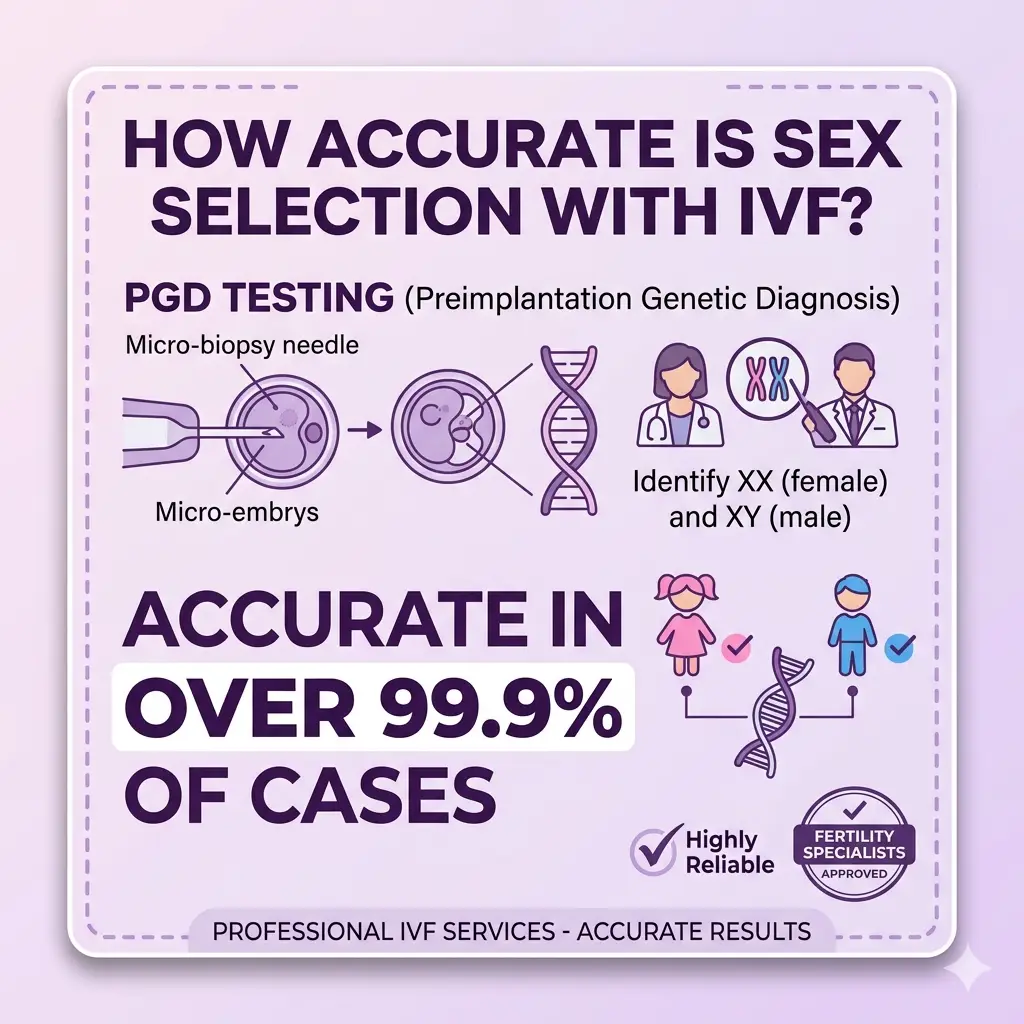
If you’re hoping to choose your baby’s sex, there’s really only one method backed by solid science: IVF combined with PGD (Preimplantation Genetic Diagnosis). This approach allows doctors to identify embryos as XX (female) or XY (male) with more than 99.9% accuracy before implantation.
By contrast, so-called “natural” techniques like the Shettles or Whelan methods haven’t been proven to work—they perform no better than chance, roughly a 50/50 outcome.
That said, there are a couple of important considerations. Gender selection isn’t legal everywhere, as laws vary from country to country. And while the sex selection itself is highly accurate, achieving a successful pregnancy still depends on factors such as maternal age, embryo quality, and overall fertility health.
In the guide below, you’ll find a clear breakdown of how gender selection works, how accurate it really is, where it’s legal, and what options are available to you.
Which one do you prefer? Blue or Pink?
What Is Gender Selection (Sex Selection)
Gender selection (also referred to as sex selection) is a medical technique that enables intended parents to choose the biological sex of their baby before pregnancy is established. This is achieved by combining in vitro fertilization (IVF) with preimplantation genetic diagnosis (PGD) — also known as PGS (Preimplantation Genetic Screening).
To understand how sex selection works, it helps to first understand natural conception. In normal circumstances, a baby’s sex is determined by the sperm: the egg always carries an X chromosome, while sperm can carry either an X (producing a female embryo, XX) or a Y (producing a male embryo, XY). This process is entirely random, with roughly a 50% chance for either sex.
Gender selection through IVF with PGD changes this random outcome into a planned one. Embryos are created in the laboratory, and a few cells are biopsied from each embryo for genetic analysis. PGD identifies which embryos are female (XX) and which are male (XY) with greater than 99% accuracy. Only embryos of the desired sex are then transferred to the mother’s uterus.
It is important to distinguish between:
- Natural gender selection (chance-based): Methods such as timing intercourse (Shettles, Whelan) or dietary changes. These have low or unproven success rates and are not supported by scientific evidence.
- Laboratory gender selection (definitive): IVF combined with PGD/PGS. This is the only scientifically validated method that provides near-certainty in choosing the baby’s sex.
How Does Gender Selection Work in IVF? (Step-by-Step)
The process of gender selection through IVF is a multi-step laboratory procedure that combines standard fertility treatment with advanced genetic testing. Below is a step-by-step breakdown of how sex selection works in practice.

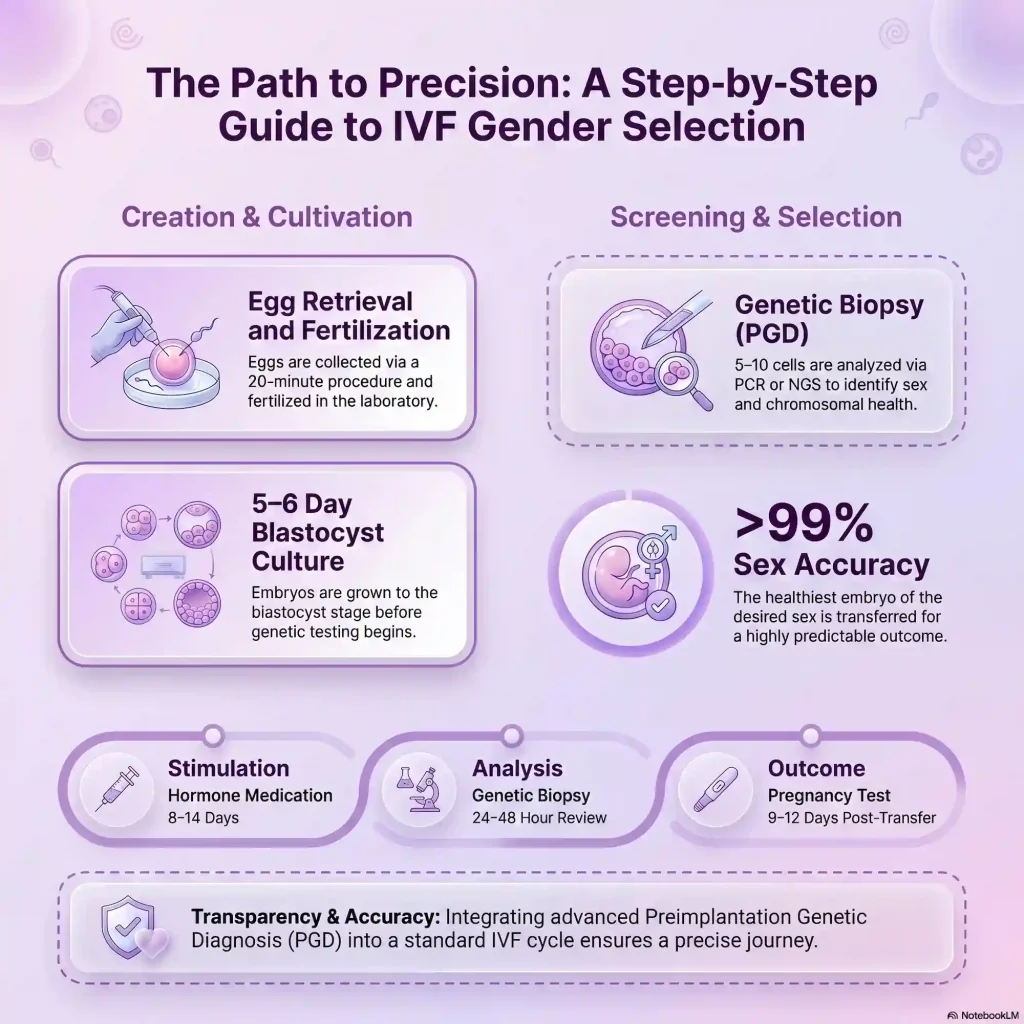
Step 1: Ovarian Stimulation & Egg Retrieval
Before starting an IVF cycle, the woman undergoes pre-cycle testing including blood work (to assess ovarian reserve) and a baseline ultrasound. These tests help the fertility specialist determine the appropriate medication protocol.
The stimulation phase then begins. The woman receives hormone medications (typically gonadotropins such as FSH) for 8–14 days to stimulate her ovaries to produce multiple mature eggs — rather than the single egg that develops in a natural cycle. Throughout this period, the patient is monitored with regular ultrasounds and occasional blood tests to track follicle growth and hormone levels.
Once the follicles reach the appropriate size (typically around 18mm), a final “trigger shot” of hCG is administered. This injection completes egg maturation and must be taken at a precise time — approximately 36 hours before the scheduled retrieval.
The egg retrieval procedure is performed under light general anesthesia or deep sedation. A thin needle is guided through the vaginal wall via ultrasound, and each follicle is aspirated to collect the fluid containing the eggs. The procedure takes 15–20 minutes, and the patient is discharged after about an hour of recovery.
Mild side effects such as bloating, cramping, or spotting are common after retrieval. In rare cases, Ovarian Hyperstimulation Syndrome (OHSS) may occur, which your fertility specialist will monitor for. The retrieved eggs are then transferred immediately to the embryology laboratory for fertilization.
Step 2: Fertilization & Embryo Creation
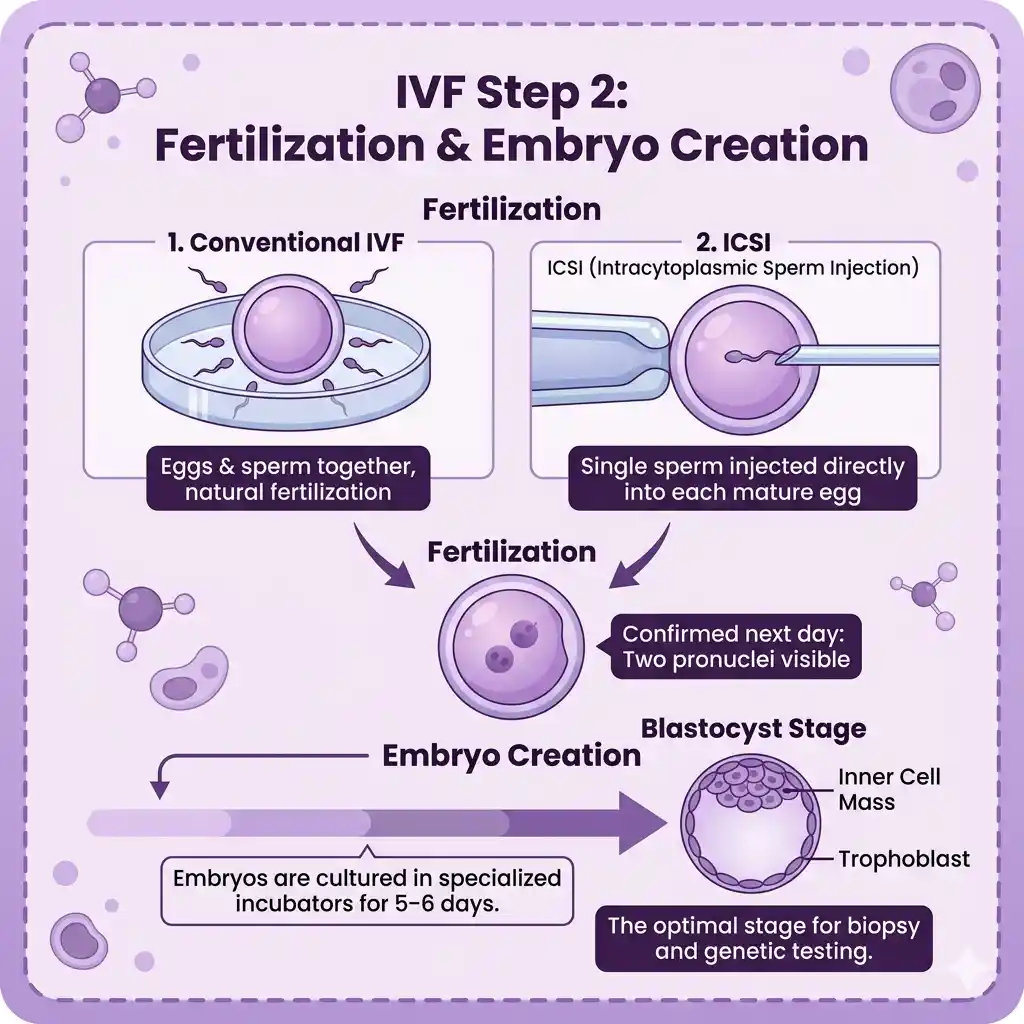
In the laboratory, the retrieved eggs are fertilized using sperm from the partner or a donor. This can be done through:
- Conventional IVF: Eggs and sperm are placed together in a culture dish, allowing fertilization to occur naturally.
- ICSI (Intracytoplasmic Sperm Injection): A single sperm is injected directly into each mature egg. This method is commonly preferred for PGD cycles because it avoids excess sperm attaching to the egg surface, which can interfere with accurate genetic testing.
Fertilization is confirmed the next day when two pronuclei (one from the egg, one from the sperm) are visible. The fertilized eggs, now called embryos, are cultured in specialized incubators for 5–6 days until they reach the blastocyst stage — the optimal stage for biopsy and genetic testing.
Step 3: Preimplantation Genetic Diagnosis (PGD)
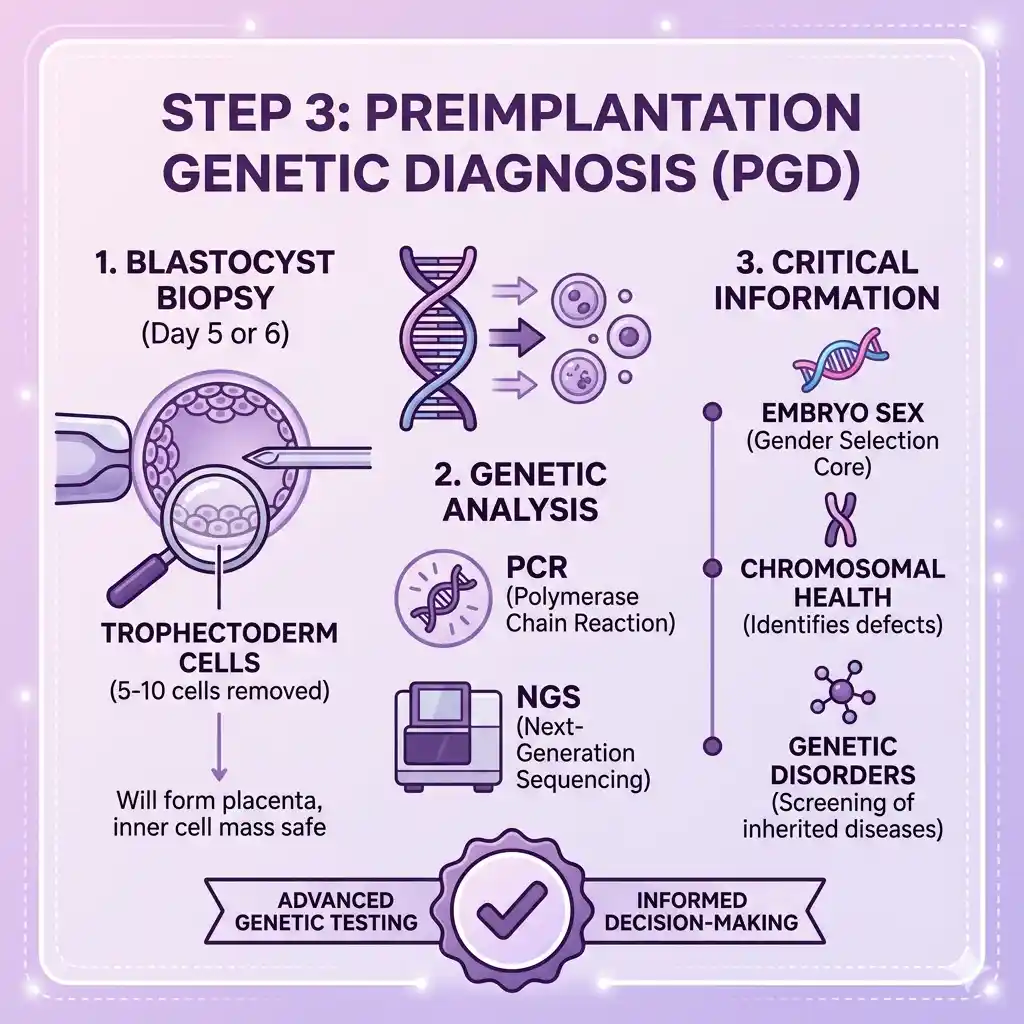
PGD (Preimplantation Genetic Diagnosis) — often used interchangeably with PGS (Preimplantation Genetic Screening) in clinical practice — is the scientific core of gender selection. Unlike natural conception where sex is determined by chance, PGD allows embryologists to identify the sex of each embryo before any transfer takes place.
The process begins with a biopsy. Typically on day 5 or 6 of development — when the embryo has reached the blastocyst stage — a small number of cells (approximately 5–10 trophectoderm cells, which will form the future placenta) are carefully removed. Some labs may perform an earlier biopsy on day 3 (when the embryo has 6–8 cells), but blastocyst biopsy is now preferred as it provides more cells for analysis and is considered safer for the embryo. Importantly, this biopsy does not harm the inner cell mass, which becomes the fetus itself.
The biopsied cells are then analyzed using advanced genetic techniques such as PCR (Polymerase Chain Reaction) or NGS (Next-Generation Sequencing) . These methods examine the chromosomes of each embryo to reveal three critical pieces of information:
- PGD for Sex Determination (XX vs. XY): The laboratory identifies the sex chromosomes of each embryo. XX is female, XY is male. This provides a direct answer to “can you select gender with IVF?” — yes, by transferring only embryos of the desired sex.
- PGD for Chromosomal Abnormalities (Aneuploidy Screening): PGD screens for aneuploidies — missing or extra chromosomes (e.g., trisomy 21/Down syndrome). Embryos with a normal chromosome count (euploid) have the highest chance of successful implantation. This is also called PGS or PGT-A.
- PGD for Monogenic Disorders (Sex‑Linked Diseases): For families with a history of sex‑linked disorders (e.g., hemophilia, Duchenne muscular dystrophy), PGD can identify affected embryos. Since these disorders primarily affect males (XY), selecting female embryos (XX) can prevent the disease entirely.
Which one do you prefer? Blue or Pink?
Step 4: Selecting & Transferring the Embryo of Desired Sex
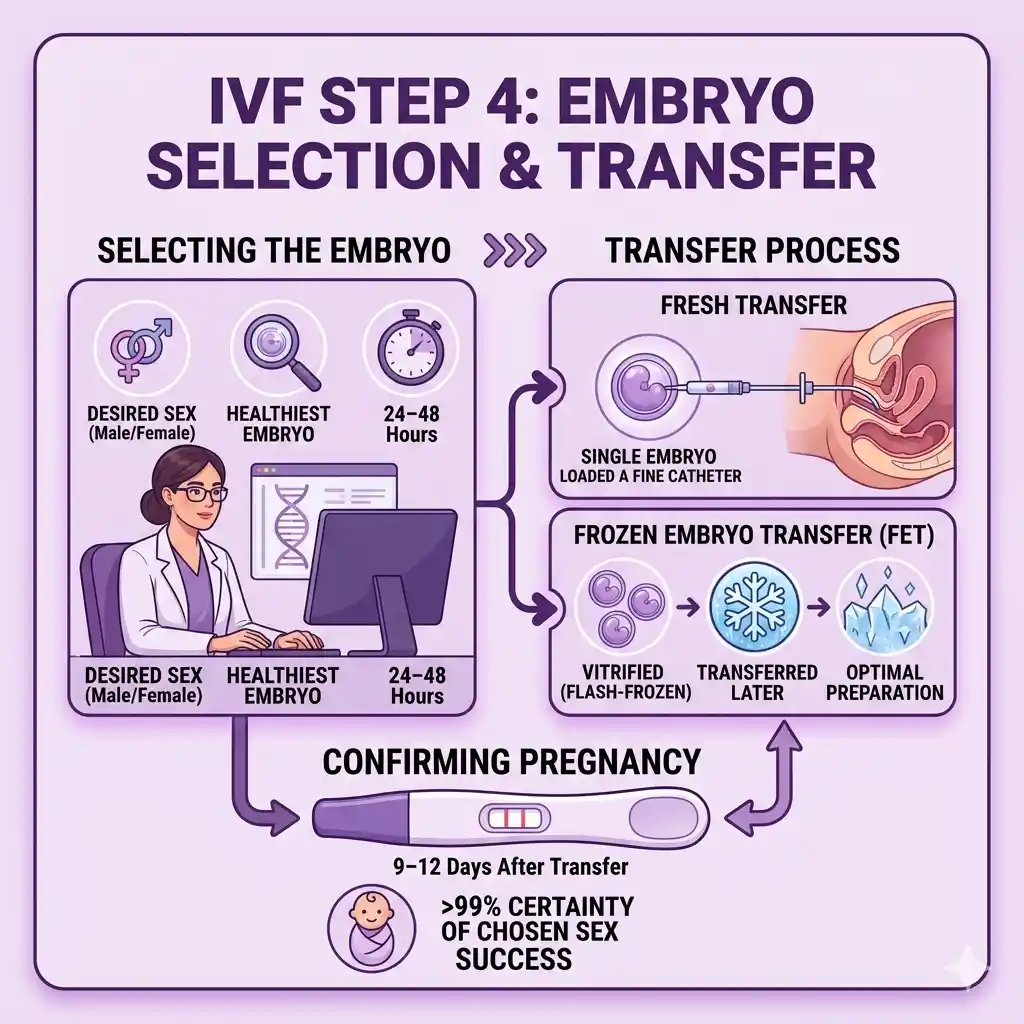
After genetic analysis is complete — typically within 24–48 hours — the fertility specialist reviews the results with the intended parents. The healthiest embryo(s) of the desired sex (male or female) are identified.
In a fresh transfer, a single selected embryo is loaded into a thin catheter and gently placed into the uterus. If the cycle is planned for a frozen embryo transfer (FET) , the chosen embryos are vitrified (flash-frozen) and transferred in a subsequent, more natural cycle. FET is increasingly preferred because it allows time for genetic results to be fully processed and for the mother’s uterine lining to be optimally prepared.
Approximately 9–12 days after transfer, a pregnancy test confirms whether implantation has occurred. If successful, the baby will be the chosen sex with >99% certainty.
How Accurate Is Gender Selection with IVF?
Modern IVF with PGT/PGD offers extremely high accuracy for embryo sex determination. Using blastocyst-stage trophectoderm biopsy and advanced genetic testing technologies, fertility specialists can identify XX (female) and XY (male) embryos with greater than 99% accuracy. Rare discrepancies are extremely uncommon and are usually linked to embryonic mosaicism — a condition in which different cells within the same embryo carry different chromosomal patterns.
Several peer-reviewed studies examining blastocyst-stage embryo biopsy accuracy and PGT validation in IVF laboratories have confirmed the high reliability of modern genetic testing methods used in fertility clinics worldwide.
However, it is important to understand the difference between gender selection accuracy and IVF success rates.
| Term | Meaning |
|---|---|
| Gender Selection Accuracy | The accuracy of identifying the embryo’s sex (XX or XY) |
| IVF Success Rate | The likelihood of achieving a successful pregnancy after embryo transfer |
While PGT/PGD can determine embryo sex with extremely high precision, the overall success of IVF treatment still depends on several important factors, including maternal age, embryo quality, uterine receptivity, and laboratory expertise.
According to statistics published by the Society for Assisted Reproductive Technology (SART) and the CDC Assisted Reproductive Technology reports, IVF live birth rates per embryo transfer commonly range between 40% and 65% in good-prognosis patients.
For this reason, IVF with PGT/PGD is currently considered the most scientifically reliable method for gender selection in modern reproductive medicine.
Other Sex Selection Methods
Before the widespread availability of IVF with PGD, various techniques were developed to help couples influence their baby’s sex. These methods fall into two categories: natural (behavioral) and laboratory-based (sperm separation). However, none of them offer the scientific reliability of IVF with PGD, and most have accuracy rates below 80% — barely better than random chance. Below is an overview of the most commonly discussed methods, followed by detailed explanations of how each one works.
The Shettles Method
Developed by Dr. Landrum Shettles in the 1960s, this method claims that Y-sperm (male) are faster but more fragile, while X-sperm (female) are slower but hardier.
- For a boy: Intercourse on day of ovulation, deep penetration, female orgasm first.
- For a girl: Intercourse 2–3 days before ovulation, shallow penetration, no female orgasm.
Shettles claimed 75-80% success, but later studies found no evidence it works. Modern microscopy has disproven the shape difference between X and Y sperm. Most experts agree: the method is no better than chance (~50%).

The Whelan Method
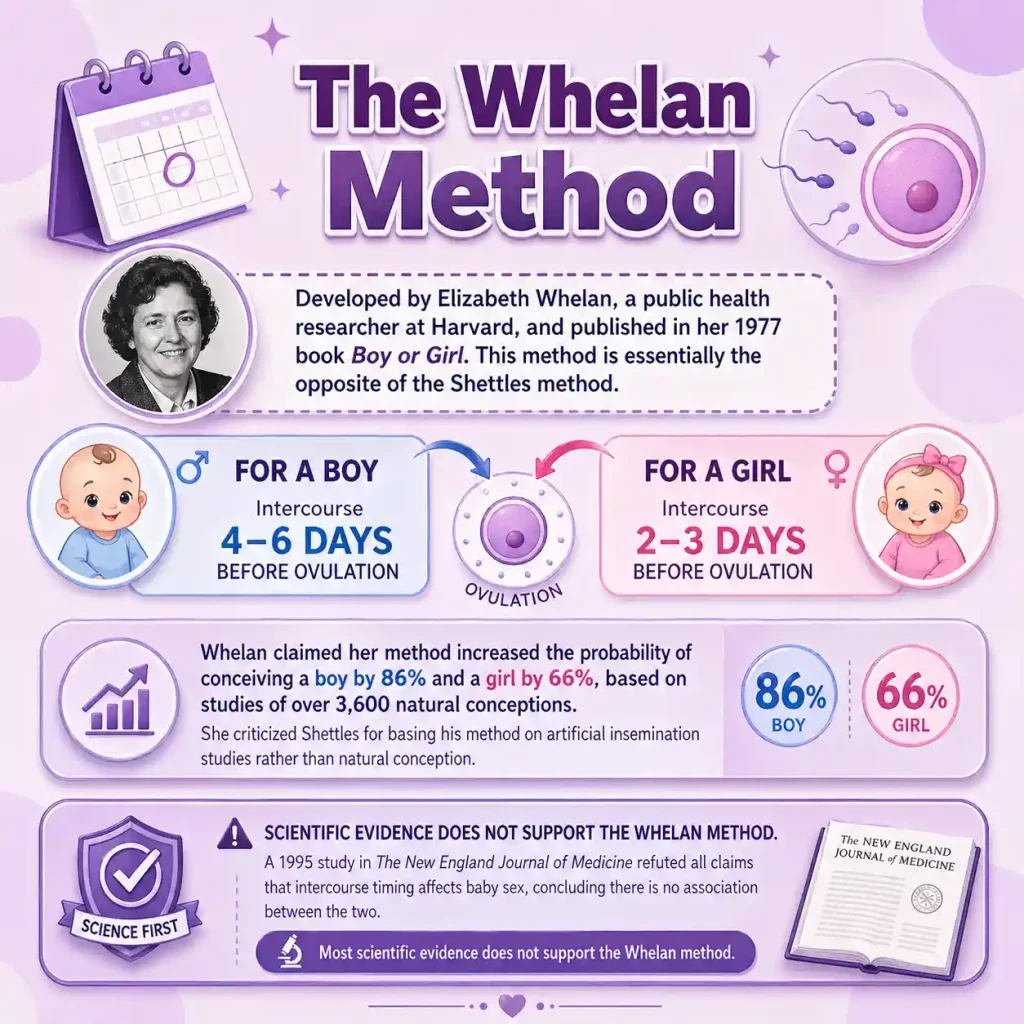
Developed by Elizabeth Whelan, a public health researcher at Harvard, and published in her 1977 book Boy or Girl. This method is essentially the opposite of the Shettles method.
- For a boy: Intercourse 4–6 days before ovulation
- For a girl: Intercourse 2–3 days before ovulation
Whelan claimed her method increased the probability of conceiving a boy by 86% and a girl by 66%, based on studies of over 3,600 natural conceptions. She criticized Shettles for basing his method on artificial insemination studies rather than natural conception.
However, a 1995 study in The New England Journal of Medicine refuted all claims that intercourse timing affects baby sex, concluding there is no association between the two. Most scientific evidence does not support the Whelan method.
Which one do you prefer? Blue or Pink?
Ericsson Method (Sperm Separation)
Developed by Dr. Ronald Ericsson in 1973, this laboratory method separates sperm based on their swimming speed. The technique uses a column filled with albumin protein solution — sperm that swim to the bottom faster are collected.
Ericsson claimed that Y‑bearing sperm (male) swim faster than X‑bearing sperm (female). Using this method, he reported achieving 72–75% male births in clinical trials. A 1975 study produced 5 male infants out of 7 births (71%).
However, a 1997 study that precisely replicated Ericsson’s original method failed to show any enrichment of Y‑bearing sperm. The researchers found the opposite result — slightly more X‑bearing sperm at the bottom. Most independent studies do not support the effectiveness of the Ericsson method, and it is not considered reliable for gender selection.

At-Home Gender Selection Kits
Several companies market at-home kits that claim to help couples conceive a baby of their desired sex. Popular examples include GenSelect and Smart Stork. These kits typically combine multiple approaches: ovulation tracking, dietary instructions, vaginal douches, and nutritional supplements.
Manufacturers claim success rates of 95–96%, but these claims are not supported by independent scientific studies. The methods used in these kits are essentially modified versions of the Shettles or Whelan methods — neither of which have proven effectiveness. No peer-reviewed research has validated any at-home gender selection kit.
Health experts advise caution, as some kits include vaginal douches that may disrupt the natural pH balance and increase infection risk. For reliable gender selection, IVF with PGD remains the only scientifically proven method.
Why Do People Choose Gender Selection?
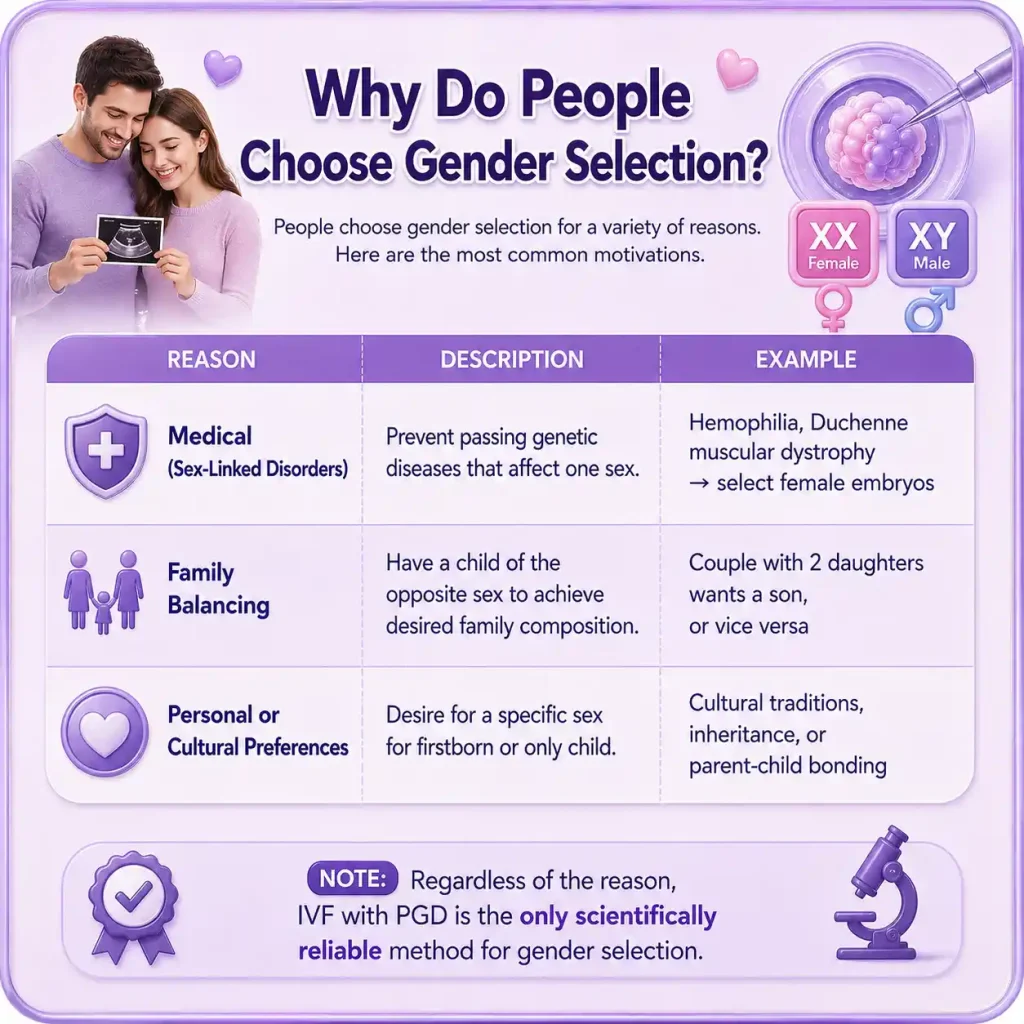
People choose gender selection for a variety of reasons, ranging from medical necessity to personal preference. Below is a breakdown of the most common motivations.
| Reason | Description | Example |
|---|---|---|
| Medical (Sex-Linked Disorders) | Prevent passing genetic diseases that affect one sex | Hemophilia, Duchenne muscular dystrophy (affect males) → select female embryos |
| Family Balancing | Have a child of the opposite sex to achieve desired family composition | Couple with 2 daughters wants a son, or vice versa |
| Personal or Cultural Preferences | Desire for a specific sex for firstborn or only child | Cultural traditions, inheritance practices, parent-child bonding |
Preventing Sex-Linked Genetic Disorders (Medical Indication): Conditions such as hemophilia, Duchenne muscular dystrophy, and Fragile X syndrome almost exclusively affect males (XY). By selecting female embryos (XX), families can completely prevent passing these diseases to their child. This is the most widely accepted medical reason for gender selection.
Family Balancing: Many parents who already have one or more children wish to have a child of the opposite sex. For example, a couple with two daughters may want a son, or a couple with two sons may want a daughter. This is called family balancing and is a common reason couples seek gender selection, particularly in countries where the procedure is legal for non-medical reasons.
Personal or Cultural Preferences: Some parents simply prefer to have a child of a specific sex — whether for their firstborn or only child. Cultural traditions, inheritance practices, or personal desires for father-son or mother-daughter bonding can influence this choice. In some cultures, there is historical preference for male children, though this varies widely by region and family.
Note: Regardless of the reason, IVF with PGD is the only scientifically reliable method for gender selection.
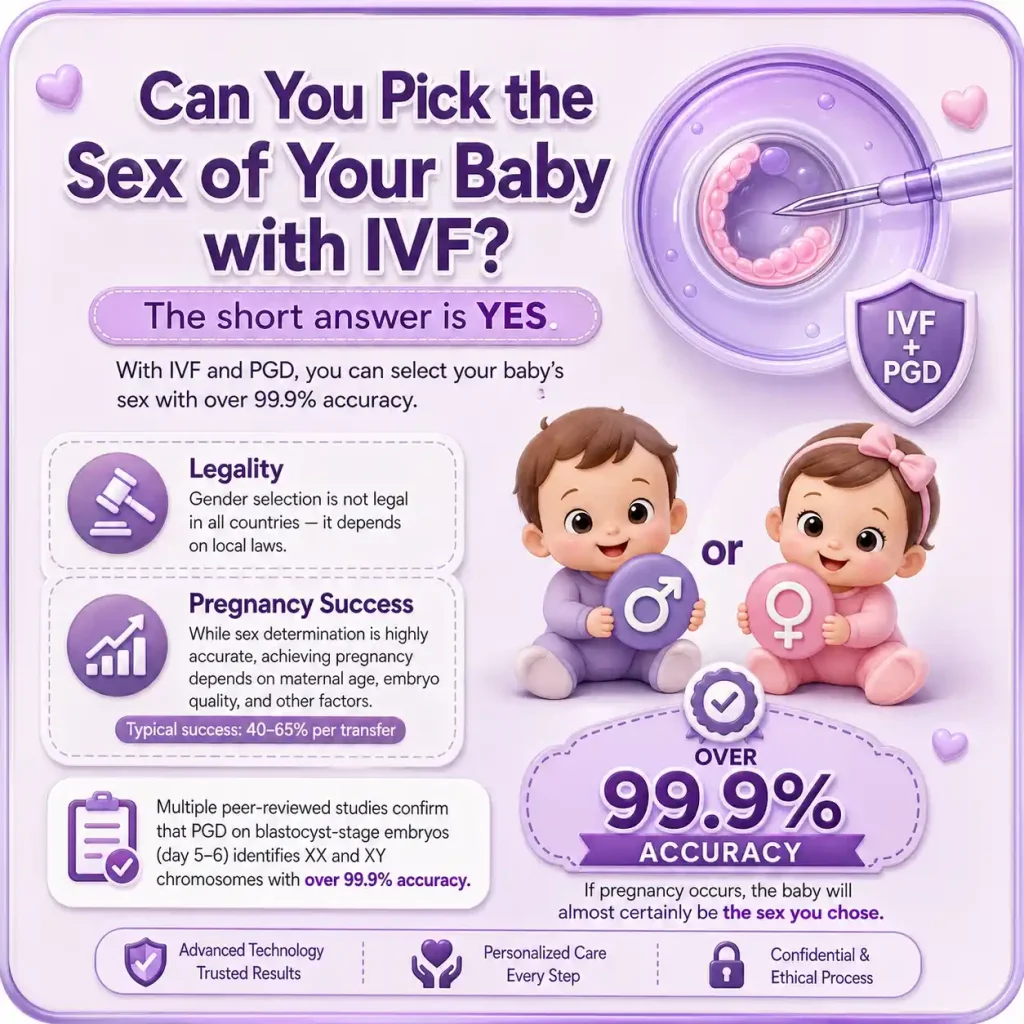
Can You Pick the Sex of Your Baby with IVF?
The short answer is yes. With IVF and PGD, you can select your baby’s sex with over 99.9% accuracy. However, there are two important points to understand:
- Legality: Gender selection is not legal in all countries — it depends on local laws
- Pregnancy success: While sex determination is highly accurate, achieving pregnancy depends on maternal age, embryo quality, and other factors (typical success: 40–65% per transfer)
Multiple peer-reviewed studies confirm that PGD on blastocyst-stage embryos (day 5–6) identifies XX and XY chromosomes with over 99.9% accuracy. This means: if pregnancy occurs, the baby will almost certainly be the sex you chose.
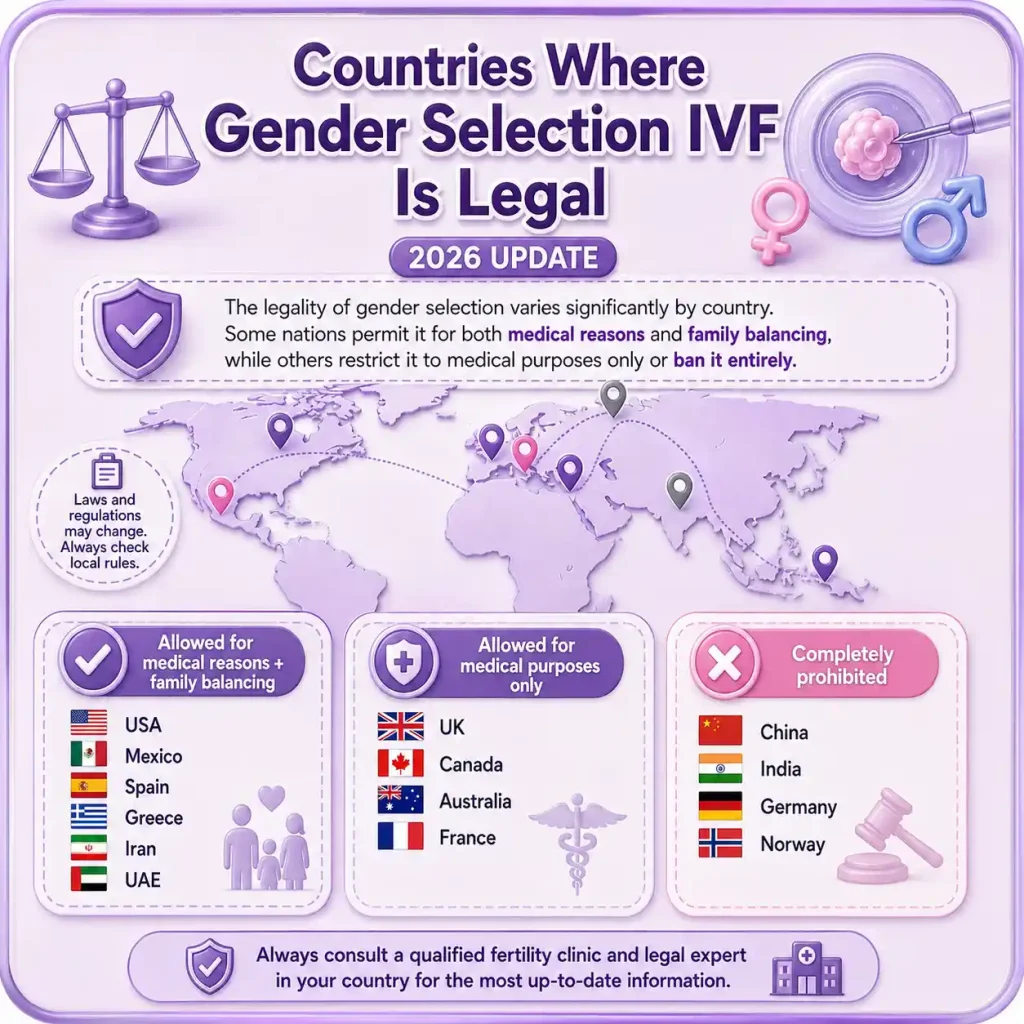
Countries Where Gender Selection IVF Is Legal (2026 Update)
The legality of gender selection varies significantly by country. Some nations permit it for both medical reasons and family balancing, while others restrict it to medical purposes only or ban it entirely.
- Allowed for medical reasons + family balancing: USA, Mexico, Spain, Greece, Iran, UAE
- Allowed for medical purposes only: UK, Canada, Australia, France
- Completely prohibited: China, India, Germany, Norway
Iran is one of the few countries where both medical and family balancing gender selection are legal, making it a notable destination for international patients. For a complete guide with detailed legal information per country, read our full article: IVF Gender Selection Legal Countries
Gender Selection in Iran: Why Medical Tourists Choose VitaLife
Gender Selection in Iran has emerged as a leading destination for gender selection, offering advanced PGD/PGS technology at affordable prices. At VitaLife, we provide international patients with:
- Over 99.9% accuracy in sex determination using blastocyst biopsy and NGS technology
- Legal gender selection for both medical reasons and family balancing
- Affordable packages – significantly lower cost than Europe or the US
- Full support services – visa invitation, airport transfer, accommodation, translation, and follow-up care
Our experienced fertility specialists have helped hundreds of families from around the world achieve their desired family composition.
Ready to start your journey? Contact VitaLife today for a free consultation via WhatsApp or call: +989379204479
Which one do you prefer? Blue or Pink?
Choosing your baby’s sex is no longer left to chance. With IVF and PGD, there’s a scientifically validated option that can determine embryo sex with over 99.9% accuracy—whether it’s for medical needs or family balancing.
That said, it’s not as simple as it sounds. The legal status of gender selection varies by country, and even with precise embryo selection, a successful pregnancy still depends on factors like age, embryo quality, and overall fertility health.
If you’re thinking about this option, it’s important to speak with a qualified fertility specialist and work with a clinic that has strong experience in PGD. The technology is highly advanced—but the outcome still relies on expert care and the right conditions.
What is gender selection?
Gender selection (also called sex selection) is a medical technique that allows intended parents to choose the biological sex of their baby before pregnancy. It is performed by combining IVF with PGD (Preimplantation Genetic Diagnosis), which identifies XX (female) and XY (male) embryos with over 99% accuracy.
What is sex selective IVF?
Sex-selective IVF is a fertility procedure that allows parents to choose the biological sex of their baby using IVF combined with Preimplantation Genetic Diagnosis (PGD).
How does sex selection work?
During IVF, embryos are created in the lab and tested with PGD to identify their sex chromosomes. Only embryos of the desired sex are selected for implantation.
Can you pick the sex of your baby with IVF?
Yes, using IVF with PGD, parents can reliably choose the sex of their baby, achieving success rates of over 99%.
Is gender choosing accurate with IVF?
Yes, IVF gender selection using PGD is highly accurate, far exceeding natural or old-fashioned methods, making it the preferred technique for families seeking selecting sex or family balancing.
Why do people choose gender selection?
Families may choose gender selection to prevent sex-linked genetic disorders, achieve family balance, or simply plan and prepare for their baby in advance.
Can you select a gender for your baby?
Yes, but only through IVF with PGD. This is the only scientifically validated method that provides reliable results. Natural methods like timing intercourse or dietary changes have no scientific evidence and work no better than chance (~50%).
Can we select a boy or girl in IVF?
Yes. During an IVF cycle, embryos are created in the lab and tested with PGD. The test reveals which embryos are male (XY) and which are female (XX). Only embryos of the desired sex are then transferred to the mother's uterus.
Is gender selection 100%?
Not 100%, but very close. PGD performed on blastocyst-stage embryos (day 5–6) is over 99.9% accurate in identifying embryo sex. Rare errors (less than 0.1%) are usually caused by embryonic mosaicism — a condition where an embryo has mixed XX/XY cells.