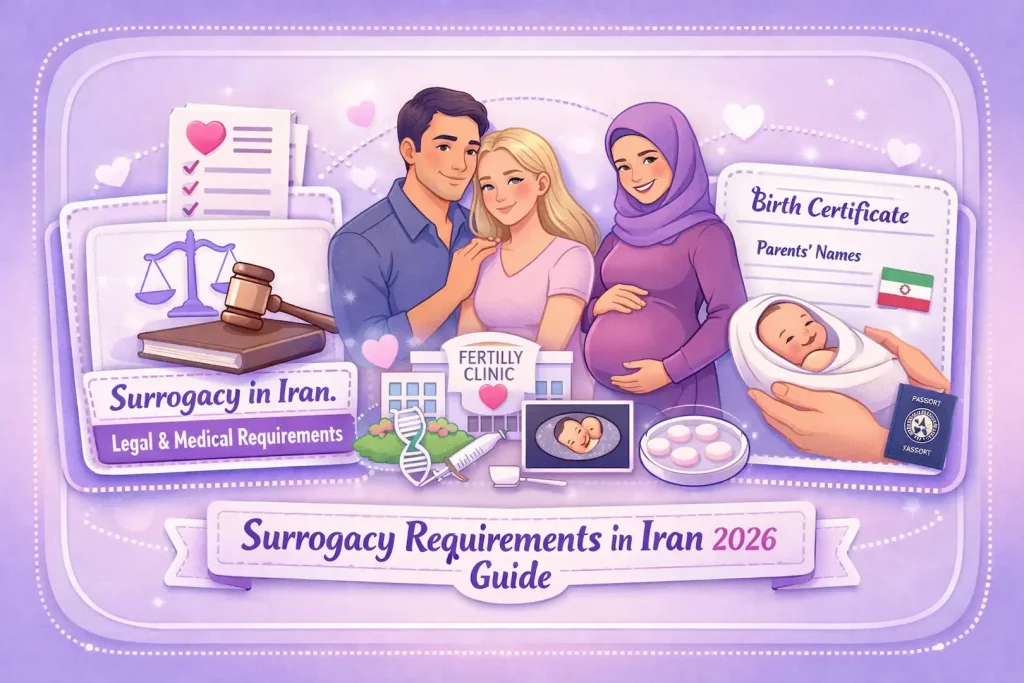
Surrogacy in Iran has developed into a legally structured and medically regulated fertility solution. Unlike many countries where the legal status of surrogacy remains unclear or restricted, Iran offers a defined framework that protects intended parents from the early stages of embryo creation through birth registration.
If you are considering this option, understanding the Surrogacy Requirements in Iran is essential. Below, we explain the legal framework, eligibility criteria for intended parents, qualifications for surrogate mothers, and the overall process in 2026.
Legal Framework of Surrogacy in Iran
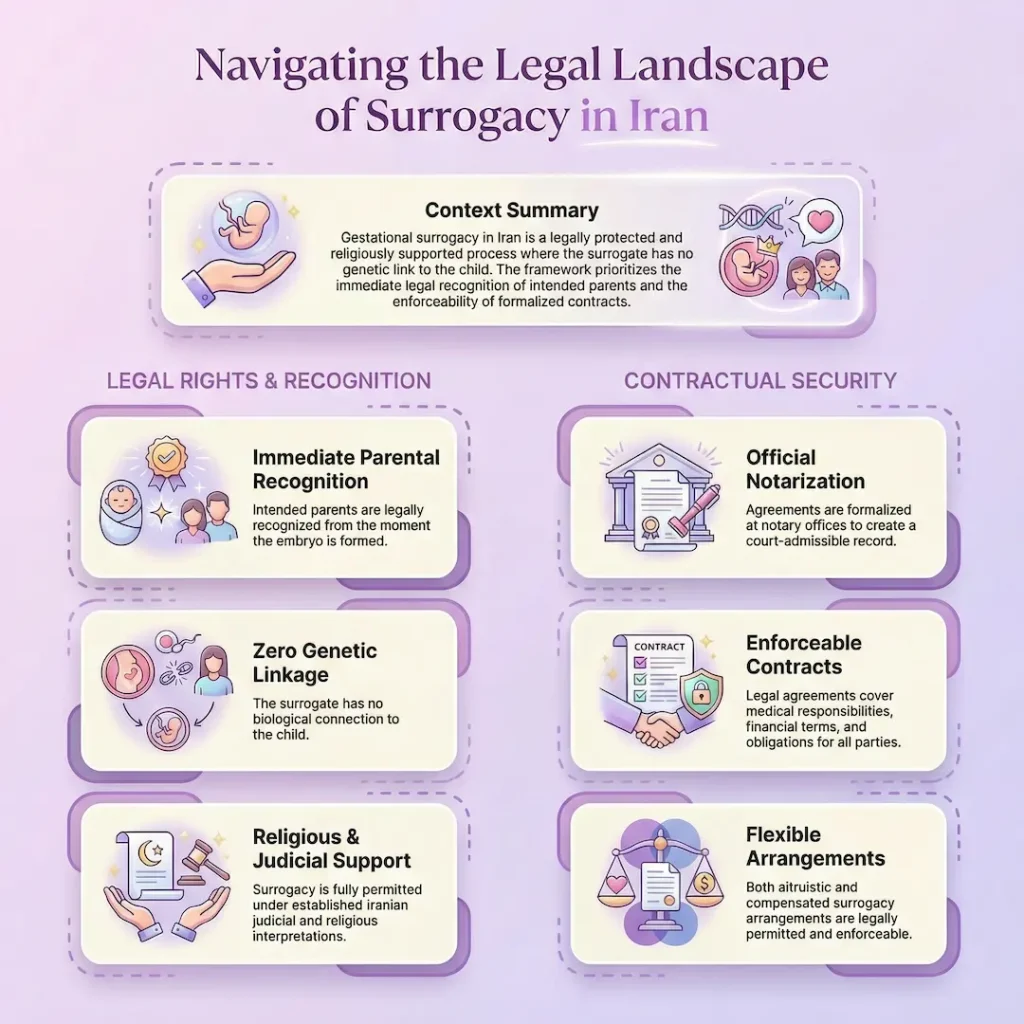
Gestational surrogacy is legally permitted in Iran and is supported by established judicial and religious interpretations. In this type of surrogacy, the surrogate has no genetic link to the child, as the embryo is created using the intended parents’ gametes (or donor eggs if medically required).
One of the most important aspects of Iranian surrogacy law is that the intended parents are recognized as the legal parents from the moment the embryo is formed. This means parental rights are not transferred after birth—they already belong to the biological parents.
Additionally, surrogacy contracts drafted by specialized lawyers are legally enforceable in Iranian courts. Both altruistic and compensated arrangements are permitted, provided the agreement clearly outlines medical responsibilities, financial terms, and legal obligations.
To ensure the highest level of legal security, surrogacy contracts in Iran are typically formalized and registered at official notary offices (Daftar-e Asnad-e Rasmi). This provides a clear, court-admissible record of the agreement between the intended parents, the surrogate, and her spouse.
Requirements for Intended Parents
Surrogacy in Iran is considered a medical treatment for infertility—not an elective lifestyle choice. For this reason, there are clear eligibility requirements.
First, the applicants must be a legally married heterosexual couple. An official marriage certificate is mandatory, and if the couple is foreign, the document must be translated and legally certified.
Second, there must be documented medical necessity. A licensed fertility specialist must confirm that pregnancy is either impossible or poses serious health risks. Common medical indications include absence of the uterus, severe uterine abnormalities, repeated IVF failure, or life-threatening pregnancy conditions.
In addition to medical confirmation, both partners must undergo infectious disease screening (such as HIV and hepatitis testing), psychological evaluation, and addiction screening. These measures ensure the safety of the child, the surrogate, and the overall process.
Importantly, the law applies equally to Iranian and foreign couples.
Requirements for the Surrogate Mother
The selection of a surrogate mother is governed by strict medical and psychological standards to protect all parties involved.
Generally, the surrogate must be between 21 and 35 years old and have at least one successful full-term pregnancy. This prior pregnancy demonstrates that she is physically capable of carrying a child without major complications.
From a medical standpoint, she must be in good overall health, have a suitable body mass index (BMI), and be free from chronic illnesses. Smoking and substance use are disqualifying factors. Comprehensive medical testing is performed before final approval.
Another important legal requirement is marital status. In Iran, the surrogate must be married, and her husband’s written and officially notarized consent is mandatory. This requirement ensures legal clarity and prevents future disputes.
Beyond physical health, psychological evaluation plays a crucial role. A mental health professional assesses emotional stability, awareness of legal responsibilities, and the surrogate’s motivations. Typically, motivations combine humanitarian intention with financial compensation.
The Surrogacy Process in Iran
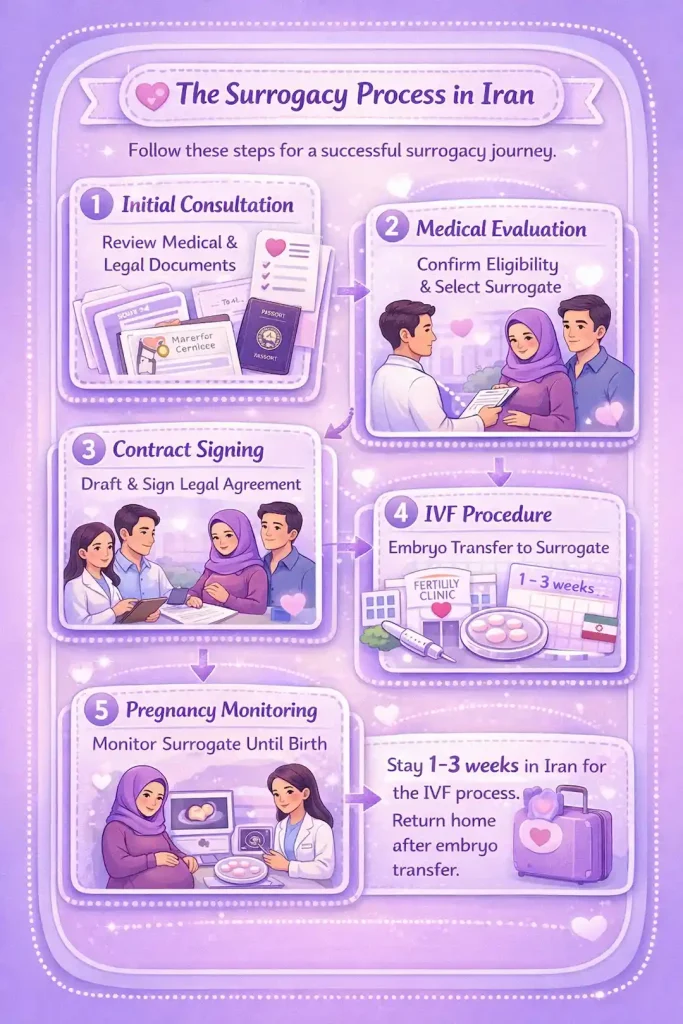
The process begins with an initial consultation, during which medical records and legal documents are reviewed. Intended parents must provide proof of marriage and prior infertility diagnosis.
Once in Iran, the couple undergoes a final medical evaluation to confirm eligibility. After approval, suitable surrogate candidates are introduced.
Before any medical procedure begins, a detailed legal contract is drafted and signed by the intended parents, the surrogate, and her husband. This agreement clearly outlines parental rights, financial terms, medical decisions, and responsibilities during pregnancy.
Only after the contract is finalized does the medical phase begin. IVF is performed, and the resulting embryo is transferred to the surrogate’s uterus. Throughout the pregnancy, fertility specialists closely monitor the surrogate’s health.
For international couples, planning the duration of stay is crucial. Typically, the first phase—which includes medical consultations, ovarian stimulation, and egg retrieval—requires a stay of 1 to 3 weeks in Iran. Once the embryos are created and the transfer to the surrogate is successful, parents may return home and stay in contact with the clinic for pregnancy updates.
Birth Certificate and Legal Parentage
One of the most significant advantages of surrogacy in Iran is the clarity surrounding parental rights.
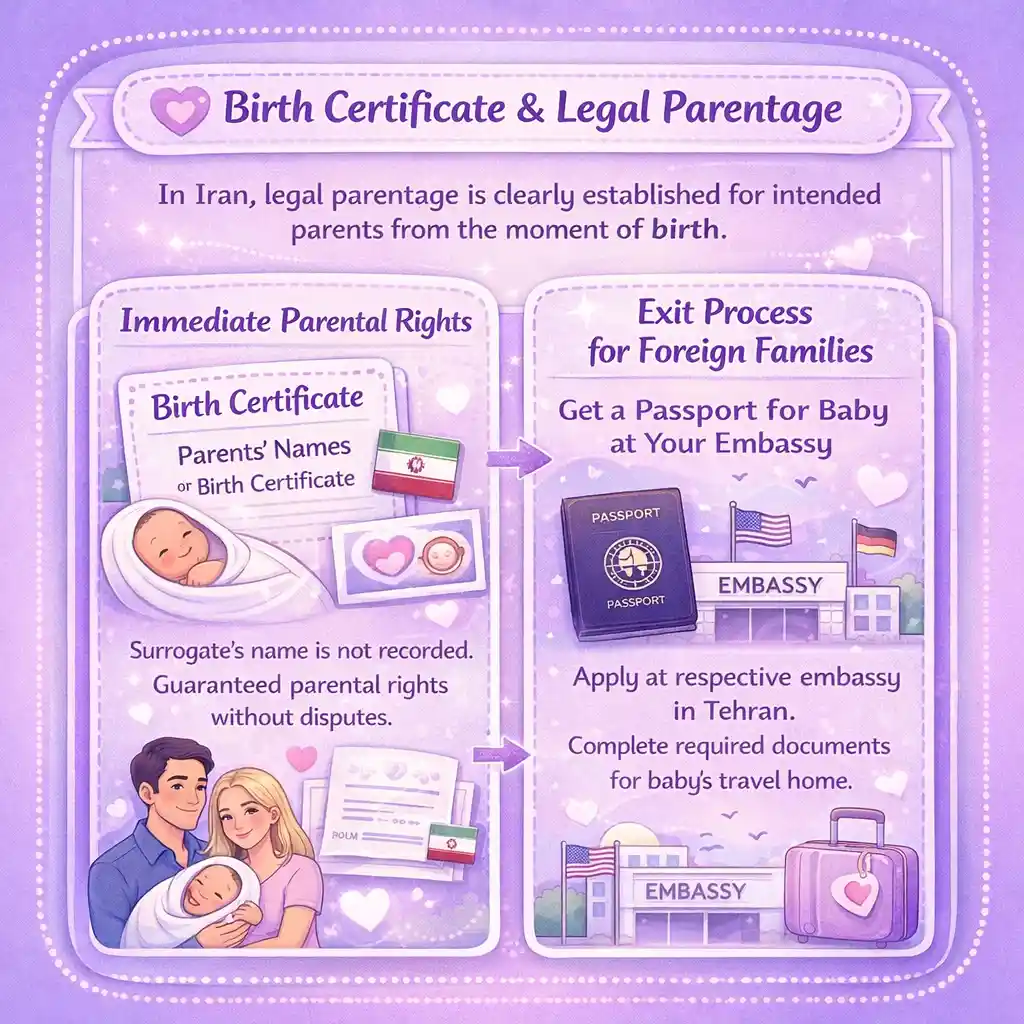
The intended parents’ names are directly recorded on the birth certificate. The surrogate mother’s name does not appear in the official documentation. This legal structure greatly reduces the risk of post-birth disputes and ensures immediate parental recognition.
For foreign parents, the birth certificate allows them to apply for a passport for their child and complete the necessary procedures to return home.
The Exit Process for Foreign Families
After the birth certificate is issued in the names of the intended parents, international couples must visit their respective embassy in Tehran to apply for the infant’s travel documents or passport. This ‘Exit Process’ is a standard procedure, and reputable fertility agencies in Iran often provide legal guidance to ensure a smooth transition back to the parents’ home country.
Egg Donation and Additional Options
If the intended mother cannot provide viable eggs, egg donation is legally permitted in combination with surrogacy. This option is often used in cases of diminished ovarian reserve, genetic concerns, or repeated IVF failure.
Iran’s fertility centers are experienced in managing combined IVF, egg donation, and surrogacy programs within a structured legal environment.
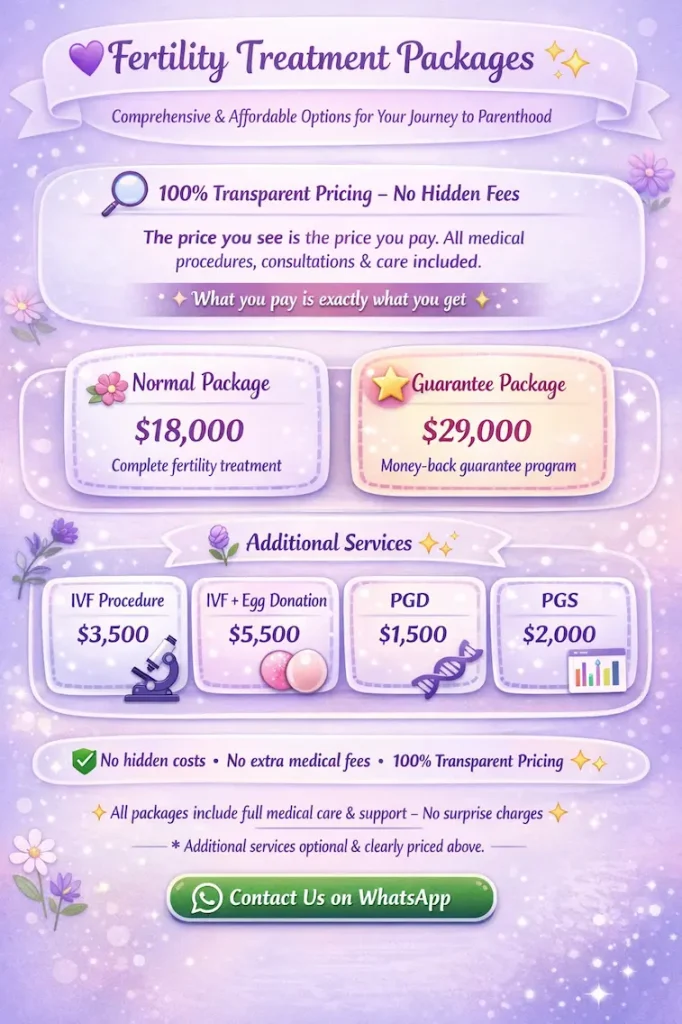
Surrogacy Costs in Iran
Both altruistic and compensated surrogacy arrangements are legal in Iran. Compensation typically covers medical treatment, legal services, surrogate support expenses, and agreed financial reimbursement.
Compared to countries like the United States, where costs can exceed $120,000, Iran remains a significantly more affordable option while maintaining legal protection and medical quality.
Iranian fertility centers utilize state-of-the-art technology, including Preimplantation Genetic Diagnosis (PGD) and Screening (PGS). These procedures allow for chromosomal screening and gender selection in iran (if medically or personally desired) before the embryo transfer, ensuring the highest chances of a healthy pregnancy and birth.
Final Thoughts
The Surrogacy Requirements in Iran are clearly defined and medically regulated. Couples must demonstrate legal marriage and medical necessity, while surrogate mothers must meet strict physical and psychological standards. With enforceable contracts and immediate legal recognition of parental rights, Iran offers a structured and secure framework for gestational surrogacy.
For intended parents seeking a legally supported and medically supervised pathway to parenthood, understanding these requirements is the first essential step.