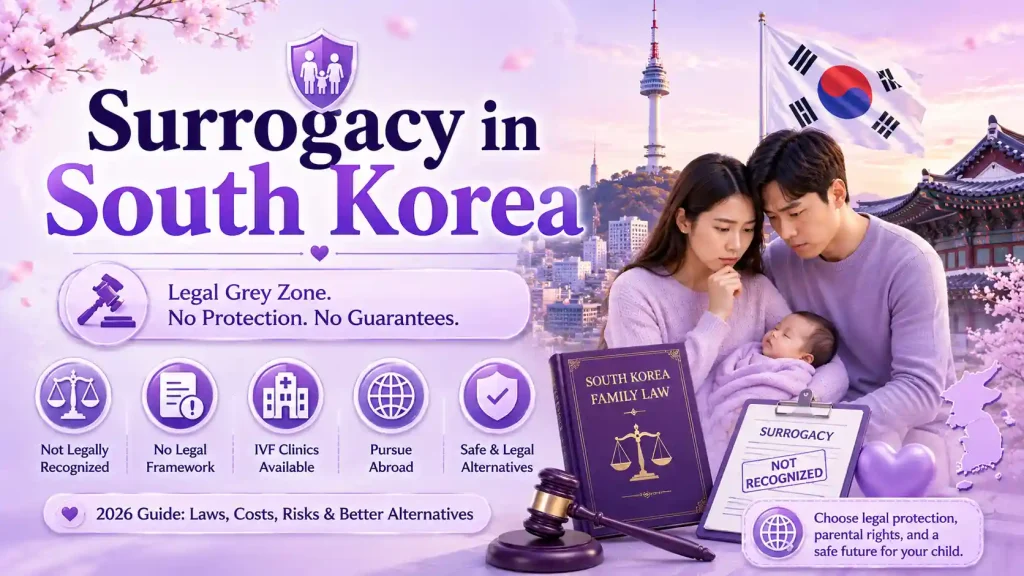
Surrogacy in South Korea is not legally recognized. It exists in a legal grey zone — not explicitly banned, but with no legal framework to protect intended parents, surrogates, or children born through surrogacy arrangements. Agreements are unenforceable in Korean courts, and licensed clinics largely avoid the procedure.
For most intended parents, the answer is clear: surrogacy must be pursued abroad.
This guide covers the legal status, costs, risks, and best international alternatives for Korean intended parents in 2026.
- Commercial surrogacy is not legally recognized in South Korea
- Surrogacy falls in a legal grey zone — not banned, not protected
- Surrogacy agreements are unenforceable in Korean courts
- Birth mother is legally recognized as the parent under Family Law
- IVF clinics are available but avoid surrogacy procedures
- Foreign intended parents face serious legal complications
- Most Korean intended parents seek surrogacy abroad
Is Surrogacy Legal in South Korea?
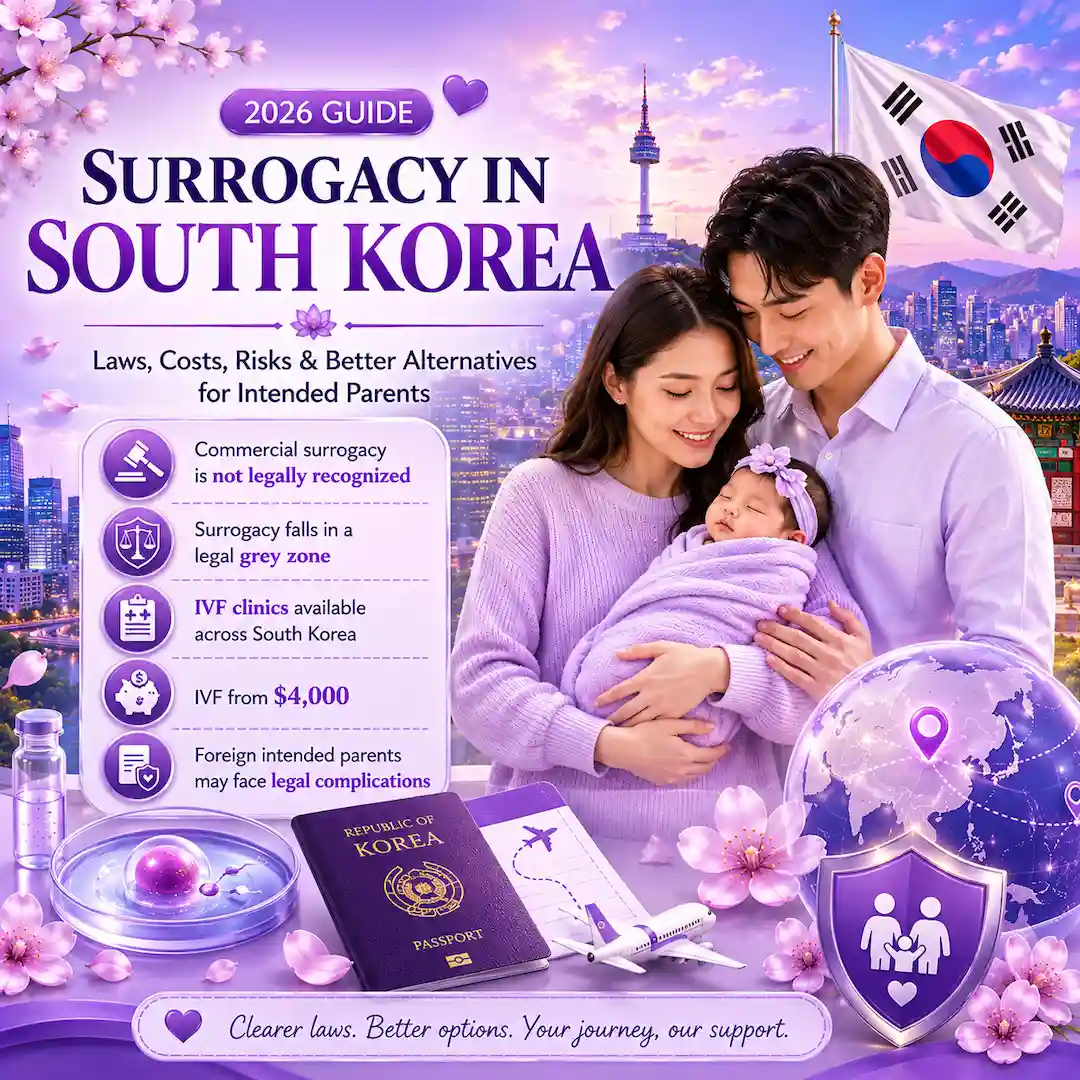
Surrogacy in South Korea is not legally recognized. There is no statute that explicitly permits or prohibits it, which places it in a legal grey zone — but that grey zone offers no protection. Surrogacy agreements cannot be enforced in Korean courts, fertility clinics avoid participating due to liability concerns, and intended parents have no automatic legal path to parenthood. In practice, this means pursuing surrogacy inside South Korea carries serious legal risks for everyone involved.
The Legal Grey Zone — Not Banned, But Not Protected
The absence of surrogacy legislation in South Korea does not make it safe to pursue. Without a legal framework, there are no enforceable contracts, no official surrogate matching process, and no institutional oversight. Most fertility clinics and hospitals in the country refuse to participate in surrogacy arrangements due to ethical guidelines and the fear of professional liability. Those who do proceed typically rely on informal, private agreements — which carry significant risk for both the surrogate and the intended parents.
Who Is the Legal Parent in South Korea?
Under South Korean Family Law, the woman who gives birth to a child is automatically recognized as the legal mother — regardless of genetic relation. This applies even in gestational surrogacy, where the intended mother’s embryo is used. As a result, intended parents are not recognized as legal parents at birth. To obtain parental rights, they must go through a domestic adoption process, which is lengthy, regionally inconsistent, and not guaranteed to succeed.
South Korea Surrogacy Laws 2026 — Any New Developments?
As of 2026, no formal surrogacy legislation has been passed in South Korea. Bioethics committees and lawmakers have acknowledged the legal gap, and the Ministry of Health and Welfare has publicly recognized the risks associated with the current situation. Discussions are ongoing, and more Korean couples traveling abroad for surrogacy has increased pressure for reform — but for now, the legal status remains unchanged.
Where Should Korean Intended Parents Go for Surrogacy?
Korean intended parents cannot legally pursue surrogacy inside South Korea — they must go abroad. The most popular destinations are Iran, the United States, Georgia, and Canada.
Choosing the right country is very important. A good destination gives you legal protection, clear parental rights, and a safe medical process. The main things to think about are: how clear the laws are, the total cost, the quality of medical care, and how easy it is to bring your baby back to Korea.
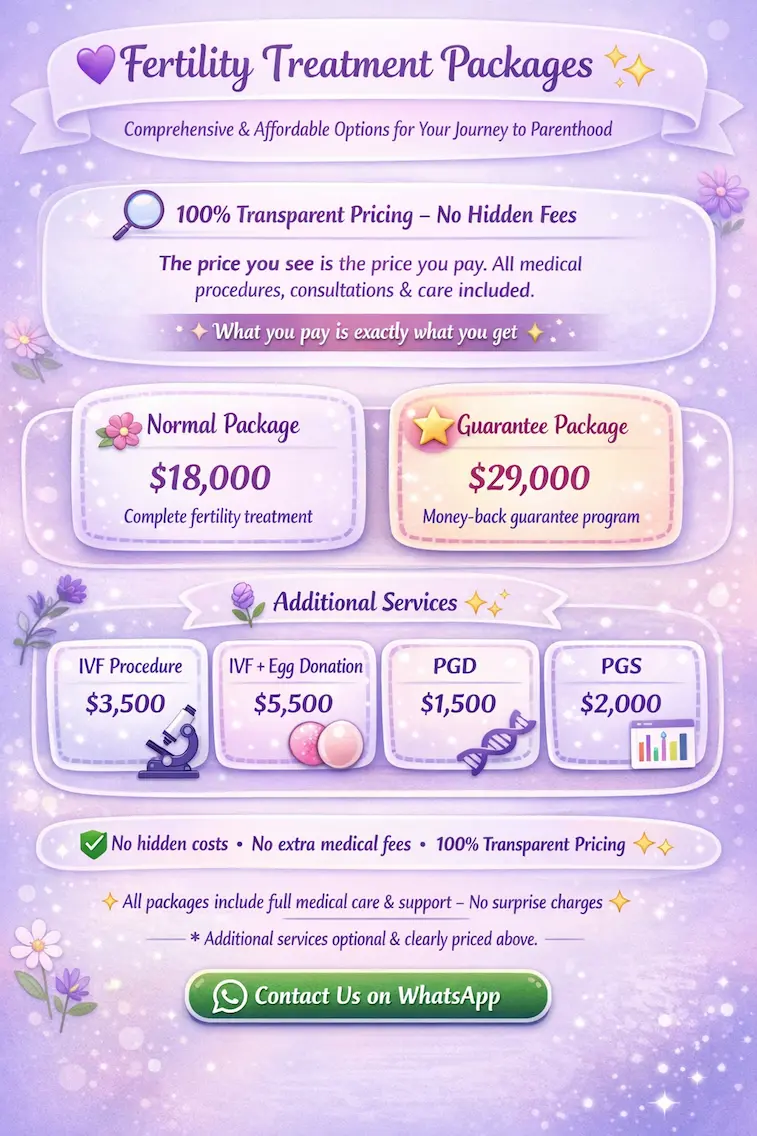
For parents who want good legal protection without high costs, Surrogacy in Iran is one of the best options. Your name goes directly on the birth certificate. The medical care is reliable, and the whole process is well-organized. Through VitaLife, Korean parents can get full support — surrogate matching, IVF treatment, legal help, and care after birth — starting from just $18,000 for a standard package with one embryo transfer, up to $28,000 for a guaranteed package with unlimited embryo transfers until your baby is born.
If your main priority is the strongest legal protection and cost is not a concern, the United States (especially Surrogacy in California) is the top choice — but the total cost is usually between $150,000 and $300,000. Georgia is also a good option with clear laws and lower costs. Canada allows surrogacy with strong legal protection, but it is harder for international parents to access.
Cost of Surrogacy in South Korea
Surrogacy in South Korea has no official pricing. Because there is no legal framework, there are no regulated costs, no standard packages, and no official agencies. Any arrangement made inside South Korea is informal — and the total cost is unpredictable.
In practice, informal surrogacy arrangements in South Korea can involve IVF costs, surrogate compensation, and legal fees — but unexpected expenses can appear at any stage. Post-birth costs can also be high, since intended parents usually need to go through an adoption process to get legal parental rights. There is no way to know the final number in advance.
More importantly, you are spending a significant amount of money with no legal protection.
This is why most Korean intended parents choose to pursue surrogacy abroad — where costs are clear, contracts are enforceable, and parental rights are guaranteed from birth.
Here is a simple cost comparison between the most popular destinations:
| Country | Estimated Cost (USD) | Legal Protection |
|---|---|---|
| Iran (VitaLife) | $18,000 – $28,000 | Strong |
| Georgia | $40,000 – $60,000 | Strong |
| USA (California) | $150,000 – $300,000 | Very Strong |
| Canada | $60,000 – $90,000 | Strong |
| South Korea | Unknown / Unpredictable | None |
For Korean intended parents looking for the most affordable option with real legal protection, Iran through VitaLife offers packages starting from $18,000 for a standard plan and up to $28,000 for a guaranteed plan with unlimited embryo transfers until your baby is born.
Best Fertility & IVF Clinics in South Korea
Top fertility clinics in South Korea include CHA Fertility Center (Seoul) with over 20,000 births, Samsung Medical Center and Asan Medical Center (both $5,400–$8,100), Ewha Womans University Medical Center ($8,000–$26,000, robotic surgery), Gachon University Gil Medical Center (Incheon), and VG Plastic Surgery (stem cell therapy from $5,800, 93% success rate).
| Clinic | City | Key Services / Specialization | Estimated Cost (EUR/USD) |
|---|---|---|---|
| CHA Fertility Center | Seoul | High-volume IVF, 20,000+ successful births | Upon request |
| Samsung Medical Center | Seoul | Advanced infertility treatments, oncogynecology | $5,400 – $8,100 |
| Ewha Womans University Medical Center | Seoul | JCI-accredited, Da Vinci robotic surgery, IVF | $8,000 – $26,000 (IVF cycle) |
| Asan Medical Center | Seoul | Largest hospital in South Korea, complex conditions | $5,400 – $8,100 |
| Gachon University Gil Medical Center | Incheon | Multidisciplinary international care, blood analysis | €430 (Extended blood analysis) |
| VG Plastic Surgery | Seoul | Stem cell therapy for fertility enhancement, 93% success rate | From $5,800 |
Surrogacy Risks in South Korea
Surrogacy in South Korea is a legal grey zone with no protections. Contracts are unenforceable, and the birth mother is always the legal mother — not the intended parents. Birth certificates list the surrogate, and parents must go through a risky domestic adoption to gain rights. For foreigners, citizenship issues are common. No licensed agencies exist, and surrogates face cultural stigma.
- No enforceable contracts — Surrogacy agreements cannot be enforced in Korean courts.
- Parental rights uncertainty — The woman who gives birth is automatically recognized as the legal mother.
- Birth certificate complications — The surrogate is listed as the mother, making registration difficult.
- Adoption requirement — Intended parents must complete a domestic adoption process to gain parental rights.
- Citizenship issues — More complex for children of foreign intended parents.
- No licensed agencies — No officially licensed surrogacy agencies exist in South Korea.
- Cultural stigma — Surrogates may face social judgment and community rejection.
South Korea vs Other International Surrogacy Destinations
Unlike most international surrogacy destinations, South Korea remains a legal grey zone with no protections for intended parents. In Iran and Georgia, surrogacy is structured and legal, with foreigners fully permitted. The USA (California) offers fully legal commercial surrogacy for all. Canada allows altruistic surrogacy only, while commercial arrangements are illegal. Ukraine provides legal surrogacy for foreign couples. Compared to these countries, South Korea is the most restrictive — contracts are unenforceable, foreigners face extreme difficulties, and commercial surrogacy is not recognized at all.
| Country | Surrogacy Status | Foreigners | Commercial |
|---|---|---|---|
| South Korea | Grey Zone | Very Difficult | Not Recognized |
| Iran | Structured | Yes | More Affordable |
| Georgia | Legal | Yes | Allowed |
| USA (California) | Fully Legal | Yes | Allowed |
| Canada | Altruistic Only | Limited | Illegal |
| Ukraine | Legal | Yes | Allowed |
Surrogacy Agencies in South Korea
There are no licensed surrogacy agencies in South Korea. The absence of any legal framework means no official agency can operate within the country. Some informal intermediaries may offer matching services, but these unregulated brokers carry extremely high legal and financial risks. For intended parents considering surrogacy, the safest approach is to work with reputable international agencies based in countries with clear surrogacy laws, such as the USA (California), Georgia, or Iran.
- No licensed agencies — There are no officially licensed surrogacy agencies in South Korea.
- High-risk informal brokers — Unofficial intermediaries carry significant legal and financial risks.
- Use reputable international agencies — Work with established agencies in countries with clear surrogacy laws like the USA, Georgia, or Iran.
Is surrogacy legal in South Korea?
Grey area — not explicitly banned, but no legal protection exists.
Is surrogacy illegal in South Korea?
Not criminally illegal, but contracts are unenforceable and legally very risky.
What are South Korea's surrogacy laws in 2026?
No formal surrogacy law. Under Family Law, the birth mother is automatically the legal parent.
Are there surrogacy agencies in South Korea?
No licensed agencies. Only high-risk informal intermediaries exist.
Can foreigners do surrogacy in South Korea?
No regulated pathway. Foreigners face significant legal, administrative, and citizenship risks.
Surrogacy inside South Korea is not a realistic option for most intended parents. There are no legal protections, no licensed agencies, and no guaranteed path to parenthood. The legal risks are real — and the financial costs are unpredictable.
The good news is that safe, legal, and affordable surrogacy is possible — just not inside South Korea.
For Korean intended parents, the most practical step is to choose a country where the laws are clear, parental rights are guaranteed from birth, and the full process is managed by experienced professionals. Countries like Iran, Georgia, and the United States have helped thousands of international families build the family they always wanted.
Through VitaLife, Korean intended parents can access a fully coordinated surrogacy program in Iran — with packages starting from $18,000 for a standard plan and up to $28,000 for a guaranteed plan with unlimited embryo transfers until your baby is born.
If you are ready to take the next step, or simply want to ask questions and understand your options, our team is here to help.