
Thinking about surrogacy in California? The total cost usually ranges between $150,000 and $250,000, depending on the agency, medical care, and surrogate experience. California is known for its strong legal protection and top fertility clinics, but most insurance plans don’t cover surrogacy, so extra planning is key. In this guide, we’ll break down what makes up California surrogacy costs and how you can manage them wisely for a smooth, stress-free journey.

Understanding the True California Surrogacy Cost
The true surrogacy cost in California typically ranges between $150,000 and $250,000, making it one of the highest in the nation. This range reflects the complexity of the process and the multiple components that contribute to the total price, including agency involvement, surrogate experience, legal representation, insurance, and medical procedures. Larger, full-service agencies often charge more due to their extensive support networks, while boutique agencies may offer more flexible pricing structures. For example, Made in the USA Surrogacy estimates their average California surrogacy cost between $165,000 and $175,000, covering agency fees, surrogate compensation, and health insurance.
These costs encompass more than just the surrogate’s base pay—they support a safe, legal, and well-coordinated journey for all parties. From medical and psychological screenings to legal documentation and insurance policies, every expense ensures the intended parents, surrogate, and baby are protected. While surrogacy can feel financially overwhelming at first, understanding the structure behind the costs highlights the investment as a pathway to building a family with security and peace of mind.
California Surrogacy Costs at a Glance
Get quick answers to key questions • Read details below if needed
Experienced: $100k+

What Determines Surrogacy Costs in California?
The total California surrogacy cost is shaped by several key factors that extend beyond base compensation. Surrogate compensation includes base pay, monthly allowances, lost wages, maternity clothing, wellness treatments, and bonuses for multiples or medical complications. Experienced surrogates typically receive higher pay due to familiarity with the process, while first-time surrogates start at a lower base rate.
Agency fees are another major contributor, covering services such as matching, case management, coordination of medical appointments, legal assistance, and ongoing support throughout the pregnancy. Agencies with larger infrastructures often charge more, whereas boutique agencies may provide personalized service at slightly lower fees.
Other costs influencing the total price include medical and fertility treatments (IVF cycles, medications, and monitoring), legal representation for both intended parents and surrogates, and insurance coverage to protect all parties. Factors like whether egg or sperm donation is needed, or the surrogate’s employment status, can also affect the total cost. This breakdown helps intended parents understand why surrogacy prices vary and how each component contributes to the overall California surrogate costs.
Average Surrogate Compensation in California
In California, a first-time surrogate generally earns between $60,000 and $90,000, while experienced surrogates can earn over $100,000. Compensation includes base pay plus additional allowances for maternity clothing, wellness treatments, lost wages, and bonuses for multiples or medical complications, making each journey unique.
Monthly stipends often cover miscellaneous expenses such as housekeeping, personal care, and prenatal wellness. Agencies may also provide IVF cycle bonuses and post-birth recovery allowances, including childcare and lost wages support.
Compensation varies depending on the surrogate’s experience, the agency’s policies, medical factors, and whether she is carrying multiples. These elements ensure surrogates are fairly compensated for their time and dedication while helping intended parents understand how each component contributes to the total California surrogate price.
Regional Differences: Northern vs. Southern California Surrogacy Costs
Surrogacy costs in California can differ by region due to local demand, living costs, and agency pricing. In Northern California, total costs typically range from $120,000 to $250,000, with first-time surrogates’ base pay starting around $66,000. Agencies in the north may charge higher fees for extensive case management, and additional expenses such as IVF cycles, insurance, and legal representation contribute to the total.
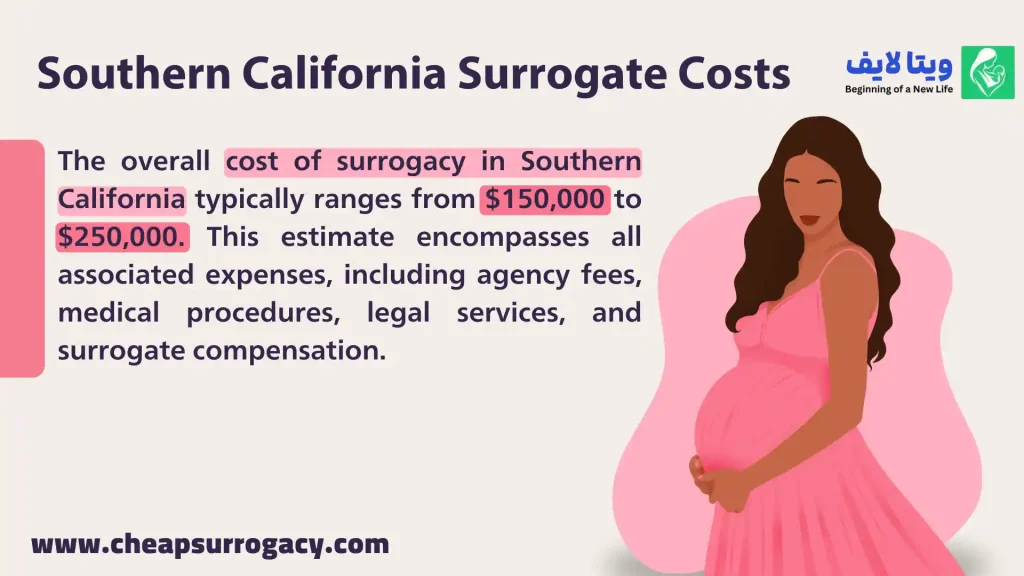
In Southern California, total costs are similar, ranging from $120,000 to $250,000, but compensation and agency fees may differ slightly. Surrogate compensation often falls between $40,000 and $70,000+, while agency fees range from $25,000 to $60,000+, reflecting high demand in metropolitan areas like Los Angeles and San Diego. IVF, legal fees, insurance, and allowances for travel or maternity needs also affect the total.
While the ranges overlap, regional differences are primarily influenced by agency practices, local cost of living, and the availability of experienced surrogates. Understanding these nuances helps intended parents plan budgets accurately and navigate the surrogacy journey with confidence.

Related Article
Your complete guide to surrogacy in the USA—understand the process, costs, and start your path to parenthood with Vita Life.
Breaking Down the Surrogacy Cost in California
Understanding the individual components of surrogacy costs in California is key to planning effectively. Each journey is unique, but knowing the typical expense categories helps intended parents budget with confidence. Costs are often managed through an escrow account to ensure transparency and security.
Base Surrogate Compensation
The gestational carrier’s compensation reflects her time, commitment, and physical effort. Base payments typically start after the fetal heartbeat is confirmed and are paid in installments.
- Estimated Cost: $50,000–$80,000+
- Additional reimbursements (lost wages, travel, maternity clothing, childcare) can add $10,000–$25,000+.
- Surrogate Mother compensation may be higher for experienced surrogates or multiples.
Surrogacy Agency Fees and Services
Agencies coordinate every aspect of the journey, from matching intended parents with surrogates to ongoing support throughout pregnancy. Services include background checks, medical reviews, psychological evaluations, and case management.
- Estimated Cost: $25,000–$45,000+
- Typically paid in installments.
- Includes coordination between medical teams, attorneys, and the gestational carrier.
Medical and Psychological Screening Costs
Medical and psychological evaluations ensure both the intended parents and the surrogate are prepared for a safe and successful journey. This category includes IVF procedures, embryo transfers, and prenatal care.
- IVF Costs: $25,000–$40,000+ per cycle (excluding donor gametes)
- Surrogate Screening & Transfer: $5,000–$10,000
- Pregnancy Care & Delivery: $15,000–$50,000+ (depending on insurance and complications)
Legal Representation and Attorney Fees
In California, both intended parents and the surrogate require independent legal counsel to draft contracts, secure parental rights, and protect all parties involved.
- Estimated Cost: $12,000–$20,000+
- Covers Gestational Surrogacy Agreement, parentage actions, and related legal services.
Health and Life Insurance for Surrogates
Insurance is a complex but essential part of surrogacy. Costs depend on whether the surrogate already has coverage and whether supplemental policies are needed.
- Types of Insurance: Surrogate health insurance, complications coverage, life insurance, and newborn insurance.
- Estimated Cost: $5,000–$35,000+
Lost Wages and Additional Surrogate Expenses
Beyond base compensation, intended parents cover the surrogate’s other pregnancy-related costs. These can include:
- Lost wages if bed rest is required
- Travel for medical appointments or embryo transfer
- Childcare and maternity clothing
- Other necessary expenses
- Estimated Additional Costs: $10,000–$25,000+
California Surrogacy Cost Calculator
California Surrogacy Cost Calculator
Estimated Costs for 2025
Estimated Total Cost
Surrogacy Cost in California with Insurance Coverage
Surrogacy in California is one of the most popular options for intended parents, but it comes with a significant price tag. Typically, surrogacy costs range from $150,000 to $250,000, depending on factors such as the surrogate’s experience, medical procedures, legal fees, and insurance coverage. While California mandates coverage for some fertility treatments, standard health insurance policies rarely include surrogacy, making it essential for intended parents to understand the nuances of insurance in this process.
How Insurance Impacts the Overall Surrogacy Cost?
Insurance plays a critical but complex role in surrogacy costs. Most standard policies in California exclude pregnancy through surrogacy, so intended parents often need to purchase a separate surrogacy insurance policy. This specialized coverage helps manage the surrogate’s medical care, delivery, and associated expenses.
Key components of surrogacy costs influenced by insurance include:
- Surrogate Compensation: Typically $40,000–$70,000, depending on experience and location.
- Agency Fees: Ranging from $25,000 to $50,000, covering screening, matching, and ongoing support.
- Medical & IVF Costs: Around $25,000–$35,000 for a single IVF cycle, plus medications and follow-ups.
- Legal Fees: $10,000–$25,000 for contracts and parental rights representation.
- Insurance Costs: The cost of a dedicated surrogacy insurance policy to cover medical care for the surrogate.
- Miscellaneous Expenses: Including travel, maternity clothing, and potential lost wages for the surrogate.
By understanding insurance’s role, intended parents can better anticipate total expenses and avoid unexpected financial burdens.
What’s Covered and What’s Not in Surrogacy Insurance?
Understanding what surrogacy insurance covers—and what it doesn’t—is essential for planning your budget:
- Standard Policies: Most U.S. and California-based health insurance policies exclude surrogacy pregnancies, leaving intended parents responsible for surrogate care costs.
- Separate Surrogacy Policies: These policies cover prenatal care, delivery, and potential complications, providing financial protection for both the surrogate and intended parents.
- Employer Benefits: Some employers offer fertility benefits that may cover IVF or, in rare cases, aspects of surrogacy, reducing out-of-pocket costs.
- State Mandates: California requires coverage for certain fertility treatments but does not guarantee coverage for surrogacy, emphasizing the need for careful planning and expert guidance.
Before Starting Surrogacy in California:
- Consult an Insurance Expert: Ensure you understand your policy and whether a separate surrogacy policy is needed.
- Work with a Reputable Agency: Agencies provide transparency on costs and help navigate insurance complexities.
- Budget Carefully: Surrogacy is a major financial commitment. Knowing all potential costs upfront is key to a smooth journey.
With proper insurance planning and support from experienced professionals, surrogacy in California can be a secure and manageable path to parenthood.
Financing and Payment Options for Surrogacy in California
Surrogacy is a life-changing journey, and planning for the financial aspect is essential. California offers several financing and payment options to help intended parents manage costs without compromising care and legal compliance.
Planning and Managing Surrogacy Expenses
Careful budgeting and financial planning are crucial to cover the full scope of surrogacy expenses, including agency fees, gestational carrier compensation, medical procedures, legal fees, and insurance. Intended parents can leverage multiple financing strategies to ensure smooth management of costs:
Personal Savings
Using your own savings is often the simplest approach. It requires careful allocation to cover costs in stages throughout the process.
Loans
- Personal and Fertility Loans: Providers like CapexMD, Prosper Healthcare Lending, SoFi, and Ally Lending offer loans specifically for fertility treatments, including surrogacy.
- Home Equity Loans: These often have lower interest rates but require collateral. Timely repayment is essential.
- 401(k) Loans: Another option for accessing funds, but should be approached with caution.
Grants and Scholarships
Organizations such as BabyQuest, Journey to Parenthood, and Men Having Babies offer grants that may cover part of surrogacy costs, though they are competitive.
Employer Benefits
Some employers provide fertility support programs that can help cover surrogacy-related expenses.
Crowdfunding
Platforms like GoFundMe allow you to share your story and raise funds from your network or the public.
Agency Financing
Some surrogacy agencies, including the Egg Donor & Surrogacy Institute (EDSI), offer in-house financing plans or can refer intended parents to trusted third-party financial services.
Health Savings Accounts (HSA)
Certain surrogacy-related medical expenses may be eligible for HSA coverage.
Understanding Cost Estimates and Payment Stages
Payments for surrogacy in California are typically structured in stages to align with the milestones of the journey:
Direct Payment
Many intended parents pay expenses as they occur, using a combination of savings, loans, or grants.
Agency Payment Plans
Agencies may provide structured installment plans to distribute costs over time, making budgeting more manageable.
Third-Party Financing
Fertility lenders, such as Prosper Healthcare Lending or New Life Fertility Finance, can help finance the journey in coordination with the agency, allowing intended parents to spread payments while maintaining access to high-quality care and legal protections.
By understanding available financing options and planning payment stages carefully, intended parents can reduce stress and focus on the joy of building their family through surrogacy.

Related Article
A Guide to Los Angeles Surrogate Costs in 2025: Breaking Down Compensation, Fees, and Financing.
Surrogacy in Iran for American Couples
Looking for a cost-effective surrogacy solution? While California offers top-tier services with premium prices, many international intended parents are discovering Iran as a remarkably affordable and reliable option for gestational surrogacy.
For American couples facing the daunting price tag of $150,000–$250,000 in California, surrogacy in Iran presents a financially accessible path to parenthood. With total costs ranging from just $19,000 to $36,000, Iran’s surrogacy programs deliver substantial savings without compromising on medical care or legal security.
Conclusion:
Surrogacy in California is among the most advanced and legally secure options worldwide — but it also comes with one of the highest price tags. With total costs ranging from $150,000 to $250,000, understanding every component — from surrogate compensation and agency fees to medical procedures, legal support, and insurance — is key to proper financial planning.
California’s strong legal framework, experienced surrogates, and world-class fertility clinics make it a preferred destination for many intended parents seeking safety, professionalism, and transparency. By carefully reviewing insurance coverage, comparing agency pricing, and exploring financing solutions, hopeful parents can make informed decisions and manage their budget effectively.
Ultimately, the true value of surrogacy in California lies not only in the medical or legal excellence but in the life-changing opportunity it provides — helping families grow with confidence, compassion, and peace of mind.
At VitaLife, we provide a comprehensive Surrogacy in Iran program specifically designed for international intended parents. We offer a transparent, all-inclusive service that combines advanced medical care with full legal support, making the dream of parenthood both accessible and secure.
On average, the total cost of surrogacy in California can range from $150,000 to $250,000.
California is a surrogacy-friendly state, but it’s crucial to understand the legal process. Both the surrogate and the intended parent(s) must have independent legal counsel. A surrogacy agreement must be created, signed, and notarized before any embryo transfer takes place.
Surrogacy became legal in California in 2013 with the enactment of California Family Code sections 7960–7962, which established clear guidelines for surrogacy agreements. Prior to that, the state had already recognized surrogacy arrangements through case law, such as the 1993 Johnson v. Calvert case.
Yes, California is considered very surrogacy-friendly due to its clear legal framework, including enforceable surrogacy agreements, pre-birth parentage orders, and legal compensation for surrogates. The state also allows surrogacy for single individuals and same-sex couples, with separate legal representation for all parties involved.
Yes, California is considered very surrogacy-friendly due to its clear legal framework, including enforceable surrogacy agreements, pre-birth parentage orders, and legal compensation for surrogates. The state also allows surrogacy for single individuals and same-sex couples, with separate legal representation for all parties involved.
In California, surrogacy coverage typically reaches up to $150,000 per arrangement, with no lifetime limit. This amount is generally considered the standard, ensuring comprehensive coverage for the surrogacy process without restrictions over time.
Under the Family and Medical Leave Act (FMLA), both intended parents and surrogates are entitled to maternity leave. This provides up to 12 weeks of leave for medical or family-related reasons, including the birth of a child.
Yes — paid surrogacy is fully legal and enforceable in California, with clear laws protecting both intended parents and surrogates.