
Surrogacy in Brazil is one of the options available to people who cannot carry a pregnancy or wish to build a family through assisted reproduction.
However, Brazil has strict regulations that determine who can participate in a surrogacy arrangement and under what conditions.
This guide explains the current surrogacy laws in Brazil, eligibility requirements, costs, and options for both local and international intended parents.
- Surrogacy in Brazil is allowed under medical regulations, but commercial surrogacy is prohibited.
- Brazil primarily permits altruistic surrogacy, meaning surrogate mothers cannot receive financial compensation beyond approved expenses.
- Same-sex couples may pursue surrogacy in Brazil, subject to the same medical and regulatory requirements as other intended parents.
- International intended parents may face additional legal and administrative challenges when pursuing surrogacy in Brazil.
- Surrogacy costs in Brazil are generally lower than in the United States, but expenses can vary depending on fertility treatments, legal services, and individual circumstances.
- Some Brazilian intended parents explore international surrogacy programs as a more affordable and accessible alternative to local options.
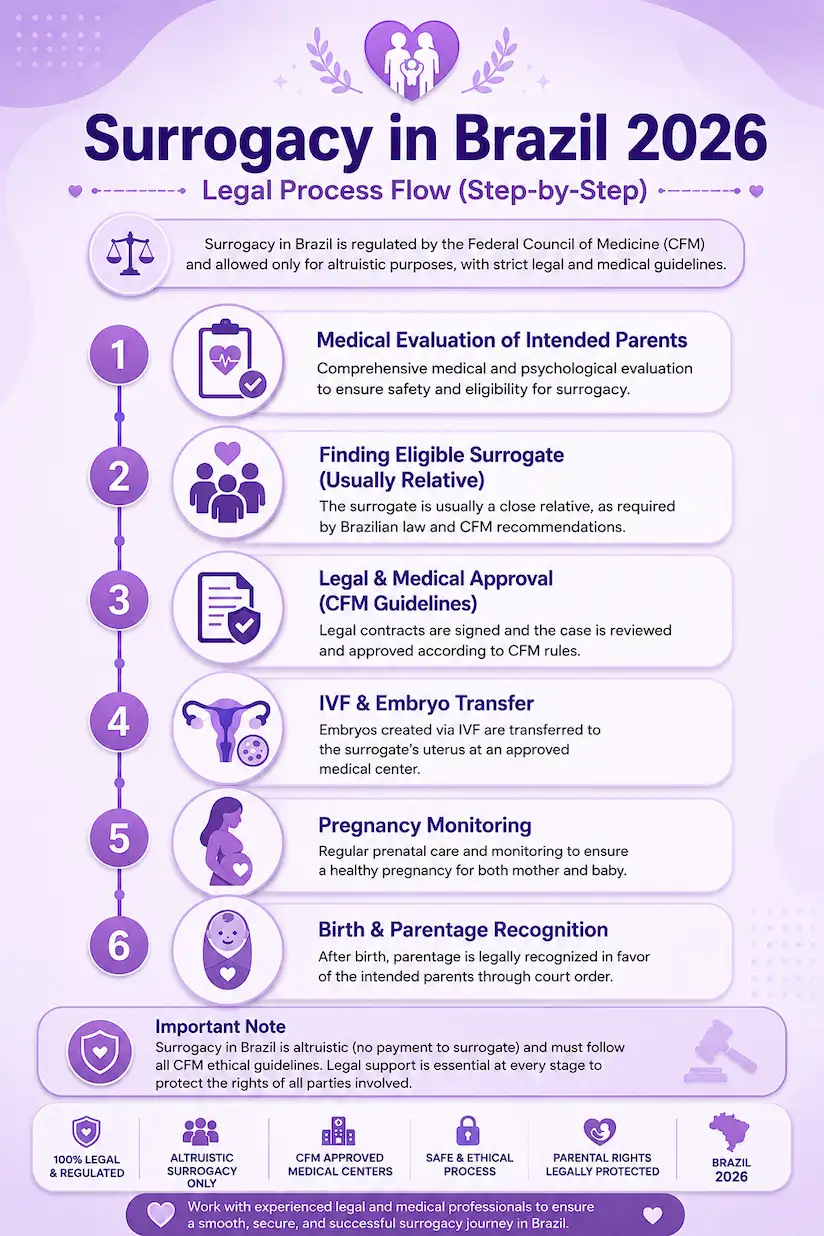
Is Surrogacy Legal in Brazil?
Yes, surrogacy is legal in Brazil. Brazil allows altruistic surrogacy under medical regulations, but commercial surrogacy is not permitted.
The process is regulated by the Federal Council of Medicine, which sets requirements for intended parents and surrogate mothers. As a result, not all surrogacy arrangements are eligible under Brazilian regulations.
Can Intended Parents Use Altruistic Surrogacy in Brazil?
Yes, intended parents can use altruistic surrogacy in Brazil if they meet the requirements established by Brazilian medical regulations.
In most cases, the surrogate mother must be a relative of one of the intended parents, and she cannot receive financial compensation beyond approved pregnancy-related expenses. All parties must provide informed consent, and the surrogacy arrangement must comply with the guidelines issued by the Federal Council of Medicine.
Because Brazil only permits altruistic surrogacy, any arrangement involving commercial payment to a surrogate mother is prohibited.
Can Gay Couples Pursue Surrogacy in Brazil?
Yes, gay couples can pursue surrogacy in Brazil. Brazilian regulations do not restrict access to assisted reproduction based on sexual orientation, allowing same-sex couples to build their families through fertility treatments and surrogacy arrangements.
However, the surrogacy process must still follow the country’s medical and ethical guidelines. This includes meeting eligibility requirements, obtaining the necessary approvals, and complying with the rules that govern altruistic surrogacy.
Because regulations and administrative procedures can vary from case to case, many same-sex couples choose to work closely with fertility specialists and legal professionals throughout the process.

How Much Does Surrogacy Cost in Brazil?
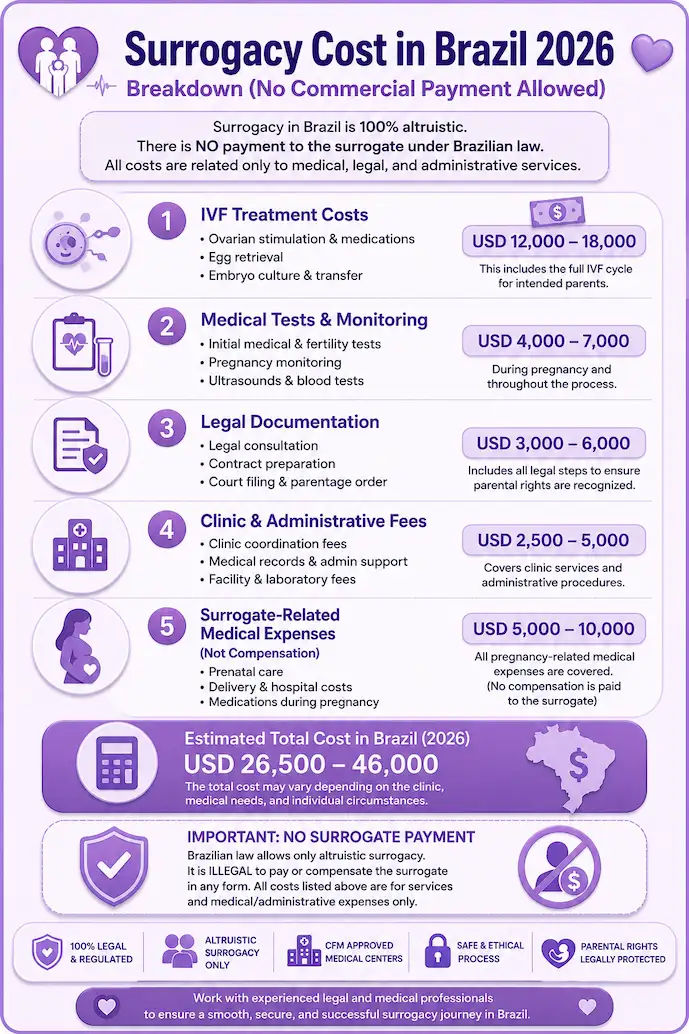
There is no standard surrogacy cost in Brazil because commercial surrogacy is prohibited.
The cost of surrogacy in Brazil can vary significantly depending on the fertility clinic, IVF treatment plan, legal services, and pregnancy-related medical expenses.
Because Brazil only permits altruistic surrogacy, intended parents do not pay compensation to the surrogate mother as they would in countries that allow commercial surrogacy. Instead, most expenses are related to fertility treatments, embryo creation, medical care, medications, and administrative or legal procedures.
As a result, total costs are often lower than in countries where commercial surrogacy is permitted. However, the final cost can still vary based on the complexity of the case and the medical services required throughout the process.
How Much Does Surrogacy Cost in Brazil?
There is no standard surrogacy cost in Brazil because commercial surrogacy is prohibited.
The cost of surrogacy in Brazil can vary significantly depending on the fertility clinic, IVF treatment plan, legal services, and pregnancy-related medical expenses.
Because Brazil only permits altruistic surrogacy, intended parents do not pay compensation to the surrogate mother as they would in countries that allow commercial surrogacy. Instead, most expenses are related to fertility treatments, embryo creation, medical care, medications, and administrative or legal procedures.
As a result, total costs are often lower than in countries where commercial surrogacy is permitted. However, the final cost can still vary based on the complexity of the case and the medical services required throughout the process.
Can International Intended Parents Access Surrogacy in Brazil?
Yes, international intended parents may be able to pursue surrogacy in Brazil. However, access can be more complex than in countries that actively offer surrogacy programs to foreign nationals.
In addition to meeting Brazil’s medical requirements, international intended parents may face extra legal and administrative steps related to parentage, documentation, travel, and citizenship. The availability of surrogacy arrangements can also depend on the specific circumstances of the case and the policies of individual fertility clinics.
For this reason, foreign intended parents should carefully evaluate both the legal and practical aspects of pursuing surrogacy in Brazil before starting the process.
Can International Intended Parents Access Surrogacy in Brazil?
There is no single federal surrogacy law in Brazil that defines all eligibility requirements. Instead, surrogacy arrangements are governed by medical regulations and professional guidelines.
In general, the following requirements may apply:
Intended Parents
- Must have a medical or reproductive reason for pursuing surrogacy.
- Must comply with the regulations established by the Federal Council of Medicine.
- Must provide informed consent before beginning the process.
Surrogate Mother
- Must participate in an altruistic arrangement rather than a commercial one.
- Usually must be a relative of one of the intended parents.
- Must voluntarily agree to the surrogacy arrangement and provide informed consent.
Medical and Legal Requirements
- All parties must undergo the necessary medical evaluations.
- Fertility treatments and embryo transfers must be performed through authorized medical facilities.
- Required documentation and approvals must be completed before treatment begins.
Because regulations may change over time and individual circumstances can differ, intended parents should consult qualified fertility and legal professionals before pursuing surrogacy in Brazil.
Is There a More Affordable Alternative to Surrogacy in Brazil?
Yes, some intended parents choose to explore international surrogacy programs when comparing costs, availability, and legal requirements across different countries.
Although Brazil may offer lower medical costs than some traditional surrogacy destinations, the country’s restrictions on commercial surrogacy and the limited availability of eligible surrogate mothers can make the process challenging for certain intended parents.
As a result, some Brazilian families consider international surrogacy options that provide comprehensive medical support, established fertility programs, and more predictable pathways to parenthood. The best option depends on factors such as budget, eligibility, legal considerations, and personal preferences.
Why Some Brazilian Families Choose International Surrogacy Options
Although surrogacy in Brazil is permitted under strict medical regulations, some intended parents look for international options due to differences in availability, eligibility requirements, and overall process flexibility.
In some cases, finding an eligible surrogate or navigating local administrative steps can be challenging, which leads families to compare other destinations before making a decision.
One option some intended parents consider is surrogacy in Iran, where fertility centers provide structured gestational surrogacy programs supported by established medical protocols and relatively lower treatment costs.
Through VitaLife’s international surrogacy programs, intended parents can access coordinated medical support and guidance throughout the process, depending on their needs and eligibility.
Is surrogacy legal in Brazil?
Yes, surrogacy is legal in Brazil under medical regulations. However, only altruistic surrogacy is allowed, and commercial surrogacy is prohibited.
Can foreigners do surrogacy in Brazil?
Yes, but international intended parents may face additional legal and administrative requirements depending on their case and clinic policies.
Can same-sex couples pursue surrogacy in Brazil?
Yes, same-sex couples can pursue surrogacy in Brazil, as access to assisted reproduction is not restricted based on sexual orientation.
Surrogacy in Brazil offers a possible path to parenthood for individuals and couples who meet the country’s medical and ethical requirements. However, the absence of a specific national surrogacy law and the strict reliance on medical guidelines make the process less predictable than in fully regulated destinations.
Because only altruistic surrogacy is permitted, and eligibility criteria can vary depending on individual circumstances, intended parents often need to carefully evaluate legal, medical, and logistical factors before starting the journey.
For many, understanding both the opportunities and limitations of surrogacy in Brazil is essential in making an informed decision about the most suitable path to building a family in 2026.