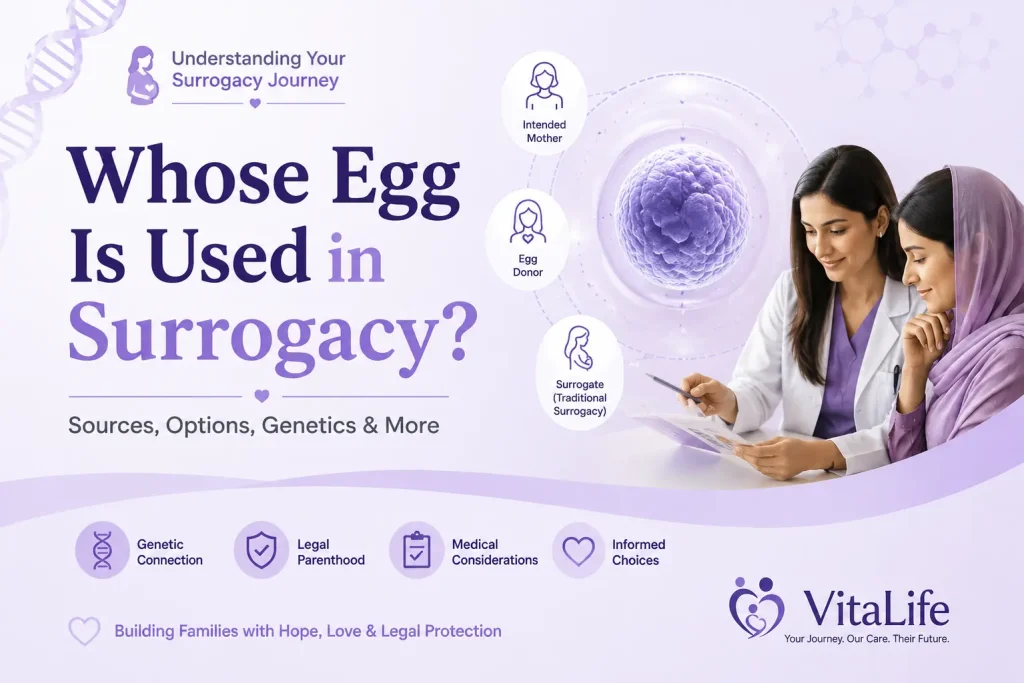
One of the first questions intended parents ask is whose egg is used in surrogacy. The answer depends on the type of surrogacy and the family’s medical situation. In most cases today, the egg comes from the intended mother or an egg donor—not the surrogate herself.
That surprises many people. A lot of people still believe that every surrogate is biologically related to the baby she carries. In modern gestational surrogacy, that’s usually not true. The surrogate carries the pregnancy, but she does not share her DNA with the baby.
The source of the egg matters because it affects genetics, medical planning, and sometimes legal steps. It also helps intended parents understand what options are available if they cannot use their own eggs.
In this guide, you’ll learn where the egg comes from in different types of surrogacy, when donor eggs are used, whether a surrogate can use her own egg, and how doctors decide which option is the best fit for each family.
- The egg used in surrogacy depends on the type of surrogacy.
- In gestational surrogacy, the egg comes from the
- intended mother or an egg donor.
- In traditional surrogacy, the surrogate uses her own egg and is genetically related to the baby.
- A donated embryo may be used when intended parents cannot use their own eggs or sperm.
- The sperm can come from the intended father, a sperm donor, or one intended father in a male same-sex couple.
- The person who provides the egg shares DNA with the baby.
- The egg source may affect genetics, legal steps, IVF planning, and treatment options.
- The best egg source depends on fertility, age, medical history, and family goals.

Whose Eggs Are Used in Surrogacy?
The egg used in surrogacy depends on the type of surrogacy. In gestational surrogacy, the egg comes from the intended mother or an egg donor. In traditional surrogacy, the surrogate mother uses her own egg. In some cases, intended parents may also choose to use a donated embryo.
Here’s a quick comparison:
| Egg Source | Used In | Genetic Link to the Baby |
|---|---|---|
| Intended mother’s egg | Gestational surrogacy | Yes, the baby is genetically related to the intended mother. |
| Egg donor’s egg | Gestational surrogacy | Yes, the baby is genetically related to the egg donor. |
| Surrogate’s own egg | Traditional surrogacy | Yes, the baby is genetically related to the surrogate. |
| Donated embryo | Gestational surrogacy | No genetic link to the intended parents (unless one parent is the donor). |
The type of surrogacy is what determines where the egg comes from. In gestational surrogacy, doctors create an embryo through IVF before transferring it to the surrogate. The surrogate carries the pregnancy, but she does not provide the egg.
Traditional surrogacy works differently. The surrogate uses her own egg, so she is also the baby’s genetic mother. Because of the medical, legal, and emotional challenges involved, this type of surrogacy is much less common than gestational surrogacy.
In the following sections, we’ll explain each option in more detail, including when doctors recommend using the intended mother’s eggs, an egg donor, or a donated embryo.

Where Can the Egg Come From in Surrogacy?
The egg used in surrogacy can come from several different sources. The right option depends on the intended parents’ medical history, fertility, and family-building goals.
The egg may come from:
- The intended mother
- An egg donor
- The surrogate (traditional surrogacy only)
- A donated embryo
Intended Mother's Egg
Using the intended mother’s egg is one of the most common options in gestational surrogacy. Doctors first check whether she can produce healthy eggs through IVF. If she can, the eggs are collected, fertilized in the lab, and the embryo is transferred to the surrogate.
Many intended parents prefer this option because it creates a genetic link between the mother and the baby. It also allows parents to use their own embryos without involving an egg donor.
Egg Donor
An egg donor may be the best choice when the intended mother cannot use her own eggs. This can happen because of age, low egg reserve, early menopause, certain genetic conditions, or previous medical treatments such as chemotherapy.
Egg donation is also a common option for single fathers and male same-sex couples. After the donor’s eggs are collected, they are fertilized through IVF before the embryo is transferred to the surrogate.
Surrogate's Egg
The surrogate’s own egg is used only in traditional surrogacy. In this arrangement, the surrogate is both the person who carries the pregnancy and the baby’s genetic mother.
Traditional surrogacy is less common today because it can raise legal and emotional questions. For this reason, many fertility clinics focus on gestational surrogacy instead.
Donated Embryo
Some intended parents choose to use a donated embryo instead of creating one with their own eggs or sperm. In this case, both the egg and the sperm come from donors before the embryo is frozen and later transferred to the surrogate.
This option may be considered when neither intended parent can use their own eggs or sperm, or when they decide that embryo donation is the best path for building their family.

In Surrogacy Whose Sperm Is Used?
The sperm used in surrogacy depends on the intended parents and their fertility plan. It may come from the intended father, a sperm donor, or one of the intended fathers in a male same-sex couple.
The sperm may come from:
- The intended father
- A sperm donor
- One of the intended fathers in a male same-sex couple
Intended Father's Sperm
When there is a male intended parent who can provide healthy sperm, doctors often recommend using it. This creates a genetic link between the father and the baby. The sperm is collected and used to fertilize the egg during IVF before the embryo is transferred to the surrogate.
Sperm Donor
A sperm donor may be used when there is no male intended parent or when the intended father cannot use his own sperm. Some families also choose donor sperm to reduce the risk of passing on a genetic condition. Donor sperm is carefully screened before it is used in fertility treatment.
One Intended Father's Sperm
For male same-sex couples, one partner usually provides the sperm while the egg comes from an egg donor. Some couples choose one partner based on medical or personal reasons. Others create embryos with sperm from both partners and then decide which embryo to transfer after talking with their fertility team.

Why Egg Source Matters in Surrogacy
The source of the egg does more than determine who is genetically related to the baby. It can also affect medical decisions, legal parenthood, and the overall IVF plan. That’s why fertility specialists discuss every option before treatment begins.
Here are the four main reasons why the egg source matters:
- Genetics: The person who provides the egg passes on half of the baby’s DNA.
- Legal parenthood: Surrogacy laws vary from one country or state to another. In some places, the source of the egg may affect the legal process or paperwork.
- IVF success: Doctors look at factors such as the age and health of the egg provider when planning treatment. These factors can influence embryo quality and the chance of pregnancy.
- Medical eligibility: Not everyone can use their own eggs. Some intended parents need an egg donor because of age, low ovarian reserve, certain genetic conditions, or previous medical treatment.
Which Egg Source Is Best for Different Families?
| Family Situation | Egg Source That May Be Recommended | Why |
|---|---|---|
| Couple with infertility | Intended mother’s egg or an egg donor | The choice depends on whether the intended mother can produce healthy eggs. |
| Older women | Egg donor | Donor eggs may offer a better chance of pregnancy when egg quality has declined with age. |
| Male same-sex couples | Egg donor | An egg donor is needed to create embryos for IVF. |
| Cancer survivors | Intended mother’s egg or an egg donor | The decision depends on fertility after treatment and any eggs that were preserved before therapy. |
| Single fathers | Egg donor | An egg donor is required to create embryos before surrogacy. |
These are only general examples. Every surrogacy journey is different, and the best option depends on medical testing, personal preferences, and advice from a fertility specialist. What works well for one family may not be the right choice for another.
Whose egg is used in gestational surrogacy?
In gestational surrogacy, the egg comes from either the intended mother or an egg donor. The surrogate does not use her own egg, so she has no genetic connection to the baby.
Can a surrogate use her own egg?
Yes, but only in traditional surrogacy. In gestational surrogacy, the surrogate does not use her own egg because the embryo is created before it is transferred to her uterus.
Can donor eggs be used?
Yes. Donor eggs are often used when the intended mother cannot use her own eggs or when there is no intended mother, such as for male same-sex couples or single fathers.
Who is the biological mother?
The biological mother is the woman who provides the egg. If the intended mother's egg is used, she is the biological mother. If an egg donor provides the egg, the donor is the biological mother.
Does the surrogate share DNA?
No, not in gestational surrogacy. The surrogate carries the pregnancy but does not share DNA with the baby because she does not provide the egg.
Can both intended parents be genetically related?
Yes, if the intended mother's egg and the intended father's sperm are used. In that case, the child is genetically related to both intended parents.
Is donor egg surrogacy successful?
Yes. Donor egg surrogacy has high success rates, especially when the donor is young and healthy. However, the chance of pregnancy also depends on embryo quality, the surrogate's health, and other medical factors.
How do intended parents choose an egg donor?
The intended parents usually choose the egg donor with guidance from their fertility clinic or surrogacy agency. They may consider medical history, physical traits, education, ethnicity, and other personal preferences before making a decision.
The answer to whose egg is used in surrogacy depends on the type of surrogacy. In gestational surrogacy, the egg comes from the intended mother or an egg donor. In traditional surrogacy, the surrogate uses her own egg.
There isn’t one option that’s right for every family. The best choice depends on fertility, age, medical history, and personal goals. Your fertility team can help you understand which option fits your situation.
Knowing where the egg comes from makes the surrogacy process much easier to understand. It also helps you ask the right questions and make informed decisions before starting your journey.